of risk measures computed from a single definition
RISK MANAGEMENT/Earlier sight of every risk
Aggregate exposure faster, report to the board with confidence, and focus on the risks ahead.
Lameh holds an institution’s risk calculations and limits in one place, so each measure is computed the same way in every function.
Request demo
calculations and limits held with the entities and positions they apply to
faster to an agreed exposure figure across functions
From the position to the limit, one way of measuring.
Each measure defined once
With Ontology, the institution’s own calculations and limits are held with the entities and positions they apply to. A measure such as exposure is computed the same way in the business, in risk, and in reporting.
Ontology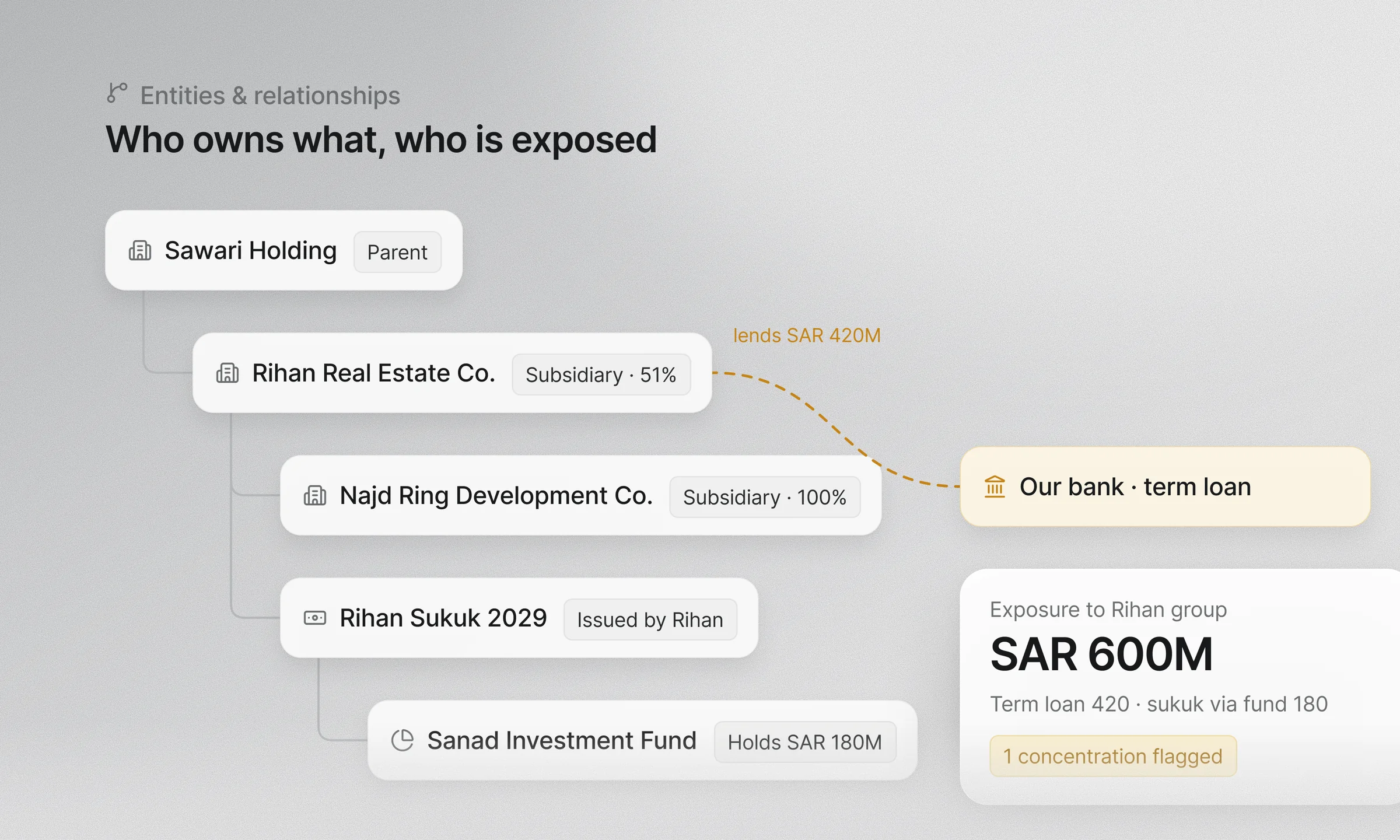
Differences that are real
With Reconciliation, the risk function defines the figures that should agree, and each is rechecked when its underlying data changes. Differences are ranked by size, probable cause, and the outputs that depend on them.
Reconciliation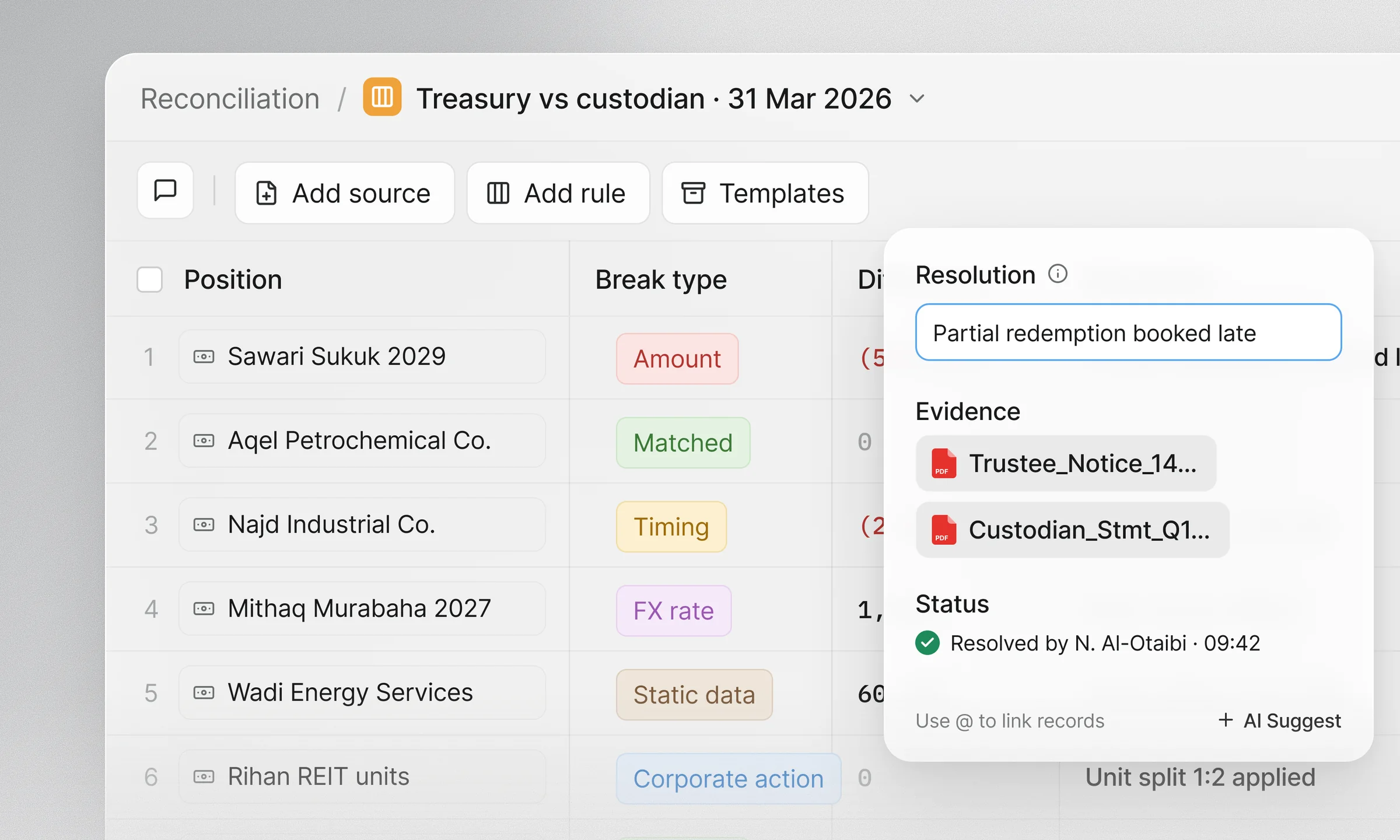
Early signs drawn from past losses
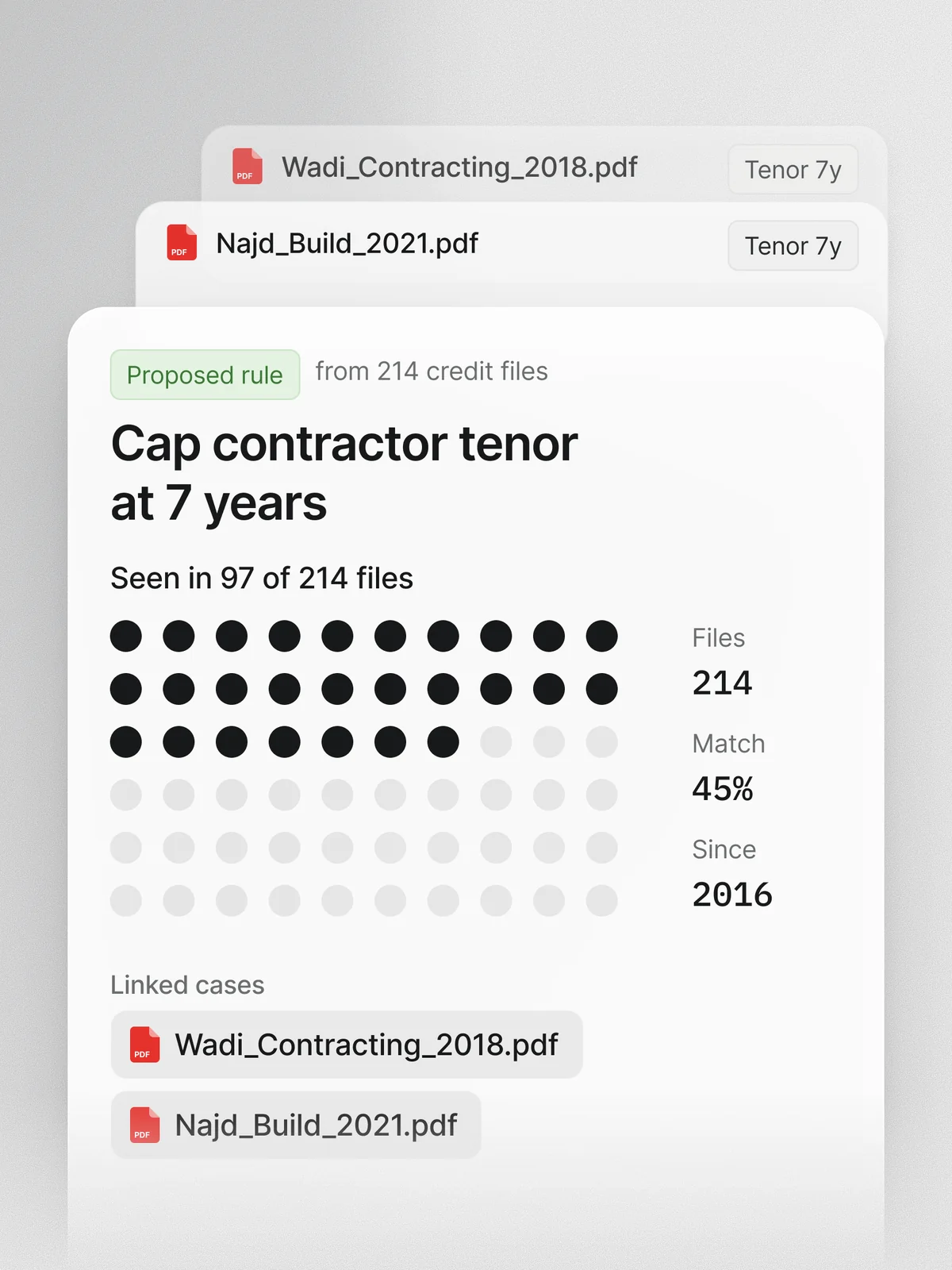
Knowledge Induction compares facts across the institution’s past cases to show the conditions that preceded losses. Each pattern is proposed as a rule to the risk function, linked to the cases that support it.
Knowledge Induction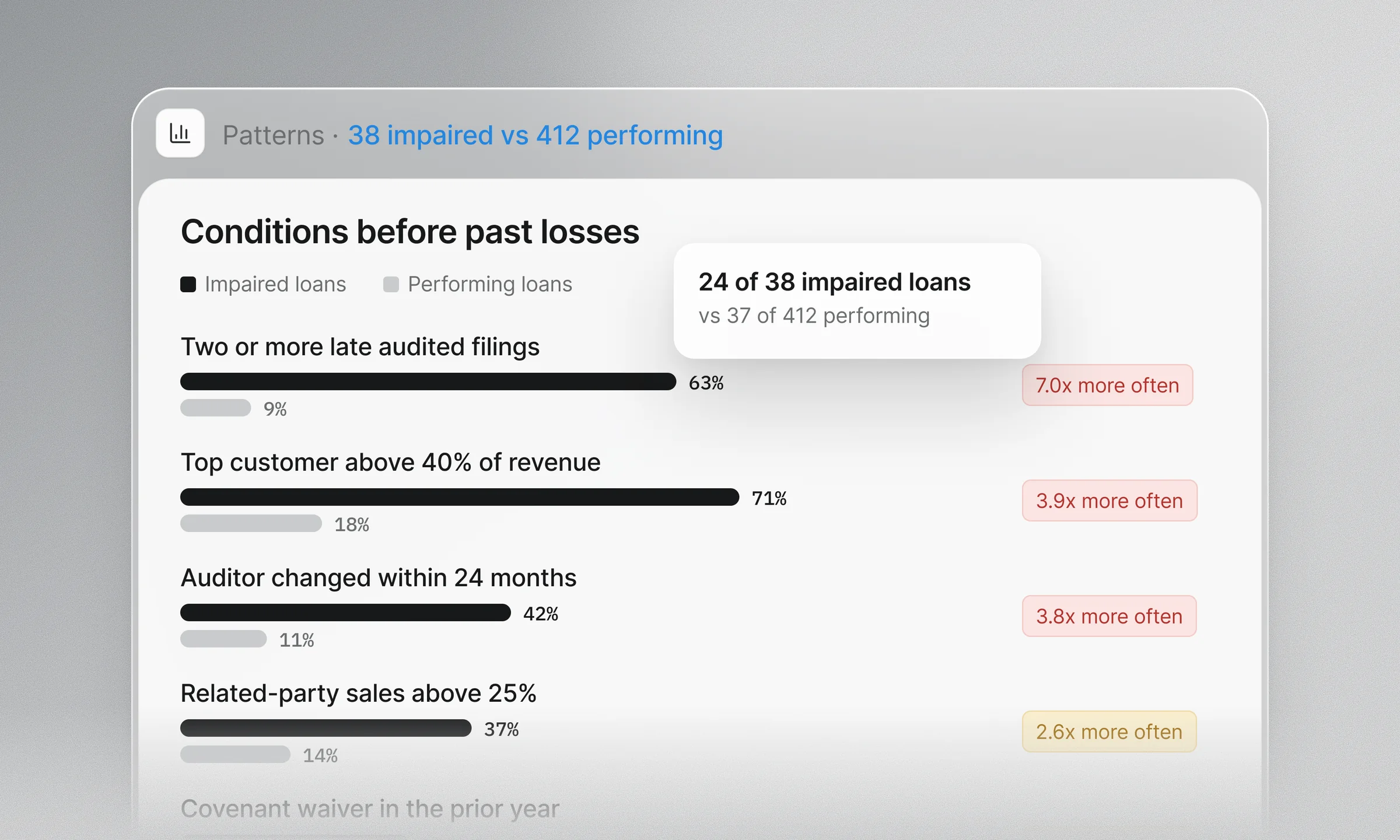
Explore the suite of products
Knowledge Induction
Patterns in the institution’s past work, proposed as rules and linked to the cases that support them.
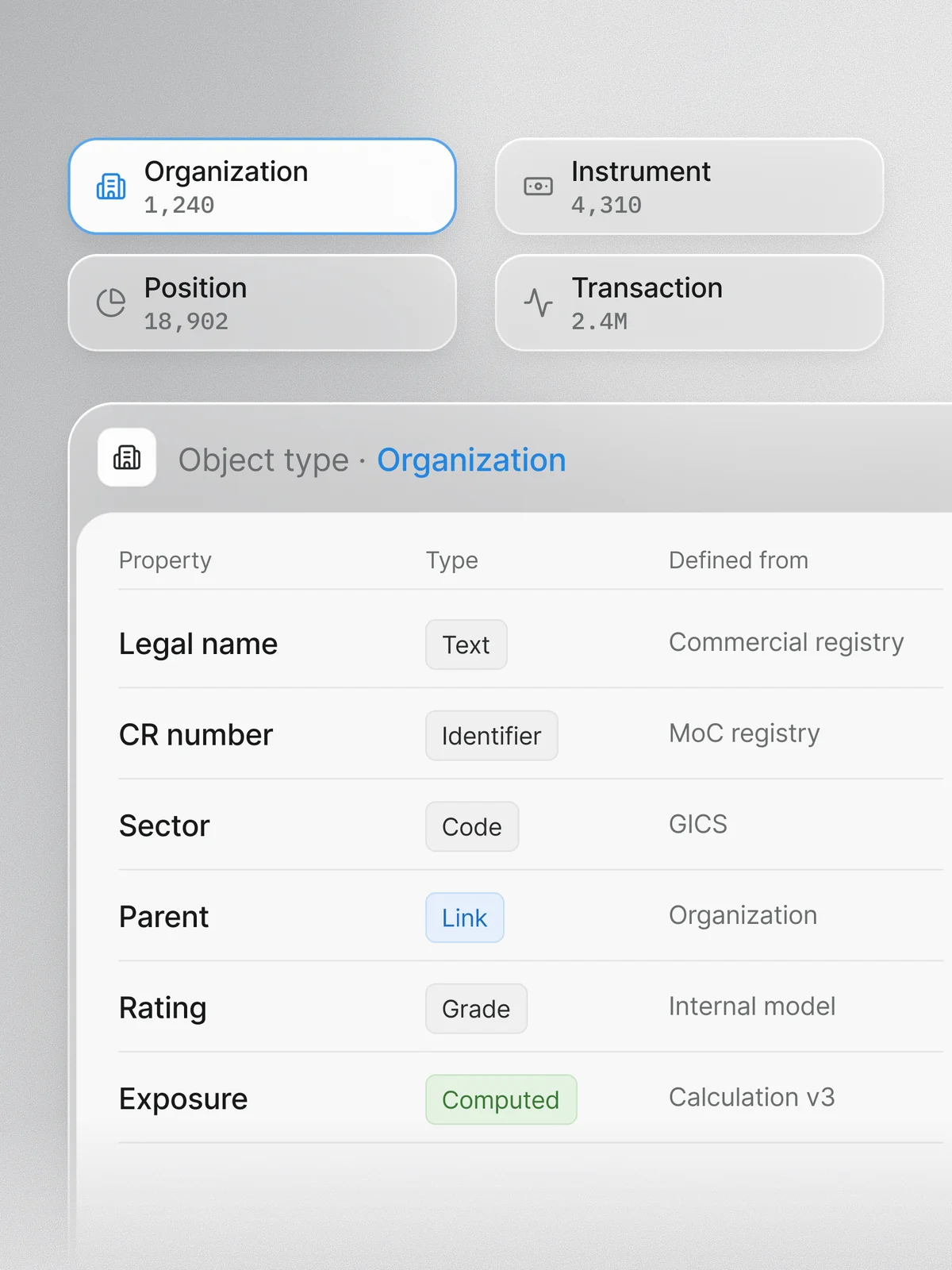
Ontology
One shared definition of the organizations, instruments, positions, and transactions the institution works with.
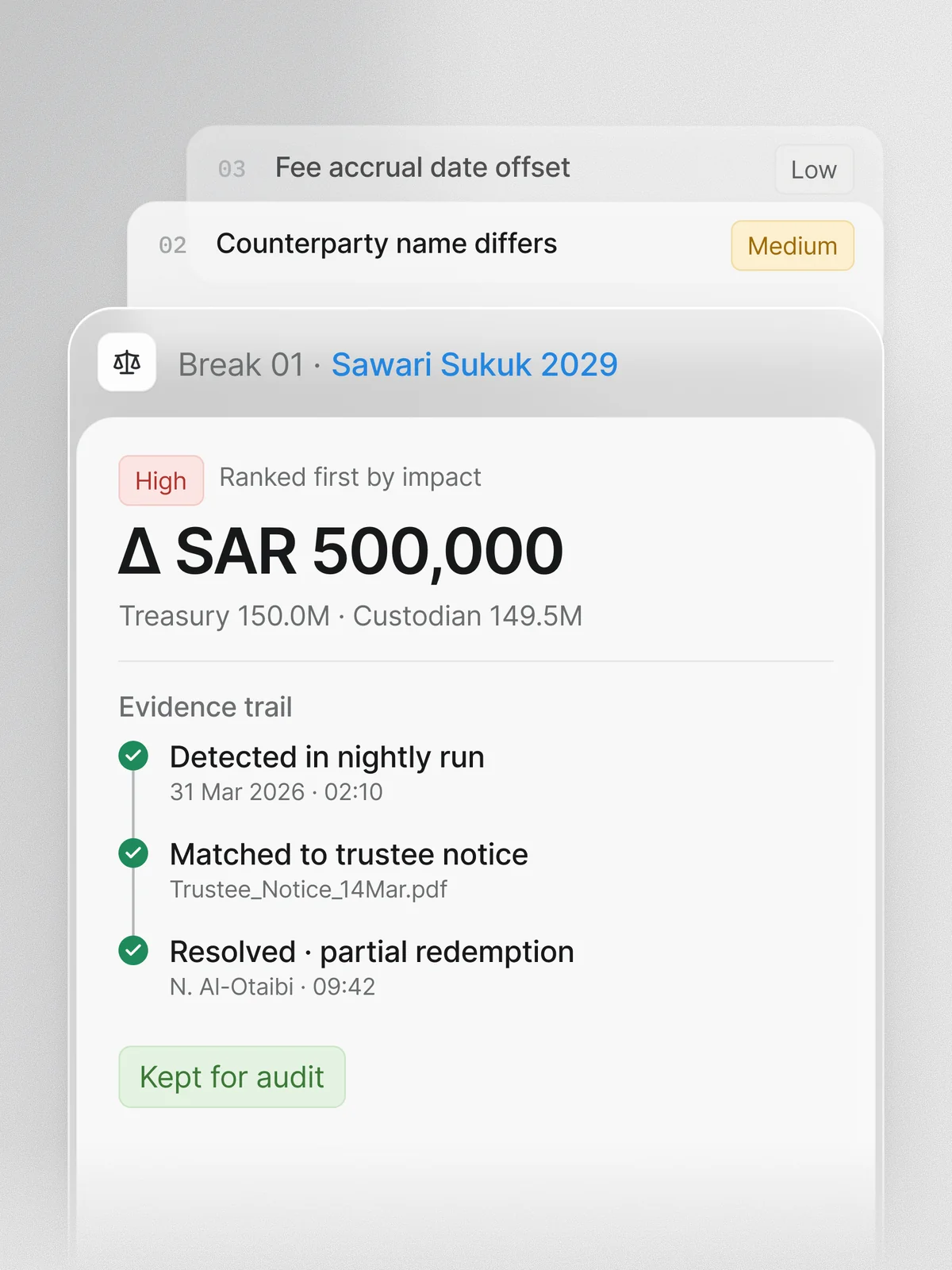
Reconciliation
Discrepancies found, ranked, and resolved, with the evidence trail kept for review and audit.
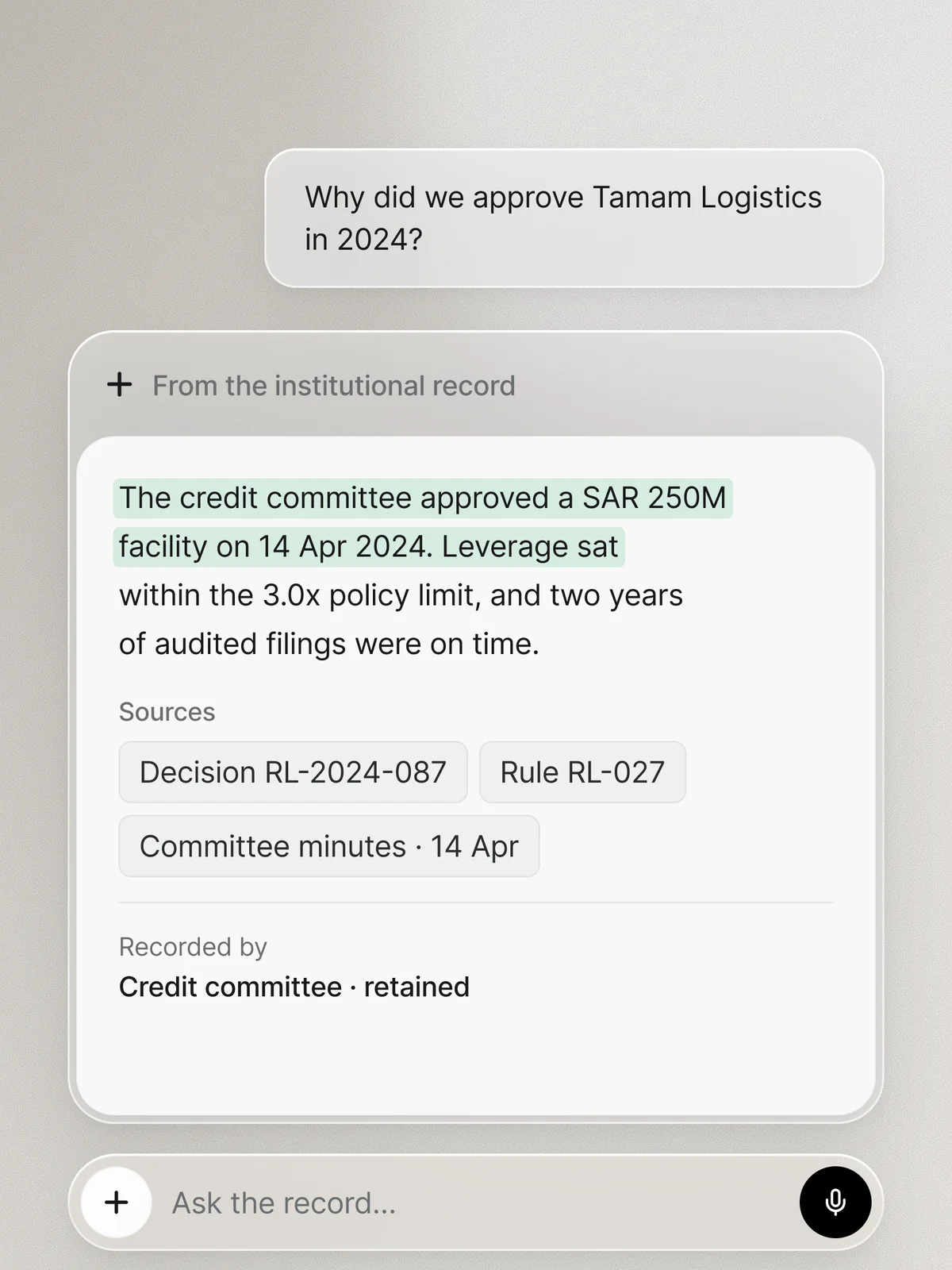
Institutional Record
Decisions, knowledge, and working methods recorded as the work happens and retained by the institution.
FAQ
Is exposure computed the same way in risk and in the business?
Yes. The calculation is held once in the ontology, and people, applications, and AI models all read from it.
How often are figures rechecked?
Each figure is rechecked when its underlying data changes, and a resolved figure remains resolved until then.
How are discrepancies prioritized?
Each is ranked by size, probable cause, and the outputs that depend on it. Expected differences, such as timing and documented exceptions, are set aside with a recorded explanation.
How does Lameh verify the figures it provides?
Each figure is read from the official source that published it, kept as reported, and linked to the document it came from. Where a figure appears in more than one source, the values are reconciled.
How does Lameh work with the systems we already use?
Lameh links the records held in separate systems to the organizations, instruments, positions, and transactions they describe. Each is defined once and mapped to its records in every source system.
How are changes proposed by an AI model controlled?
Changes are made through defined actions, each with its conditions, approvers, and log. A limit increase follows the same approval path whether a person or an AI model proposes it.
Does the institution depend on a single AI model?
No. Each prompt is routed to the model best suited to it, weighing reasoning, accuracy, speed, and cost, and new models enter the routing as they are released.
One definition of each measure, read by every function
Your institution’s own calculations and limits held in one place, with a single agreed value for each figure that depends on them.
Request demo