Entities and their relationships
Each organization, instrument, and position is defined once and mapped to its records in every source system. The links between them are kept as well: who owns what, and who is exposed to whom.
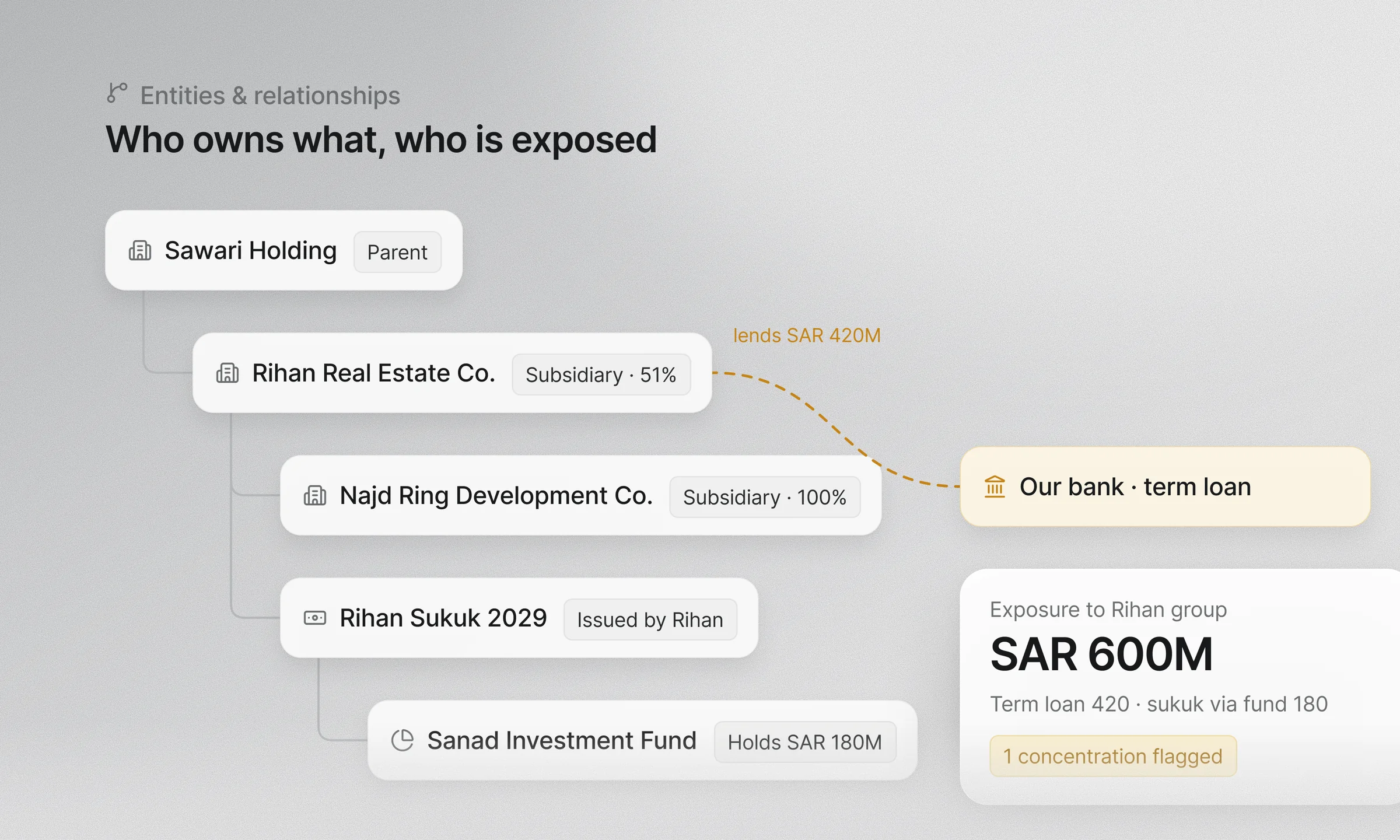
Lameh links the records held in separate systems to the real things they describe: organizations, instruments, positions, and transactions. A firm recorded under three names in three systems becomes one entry, and people, applications, and AI models all read from it.
Request demo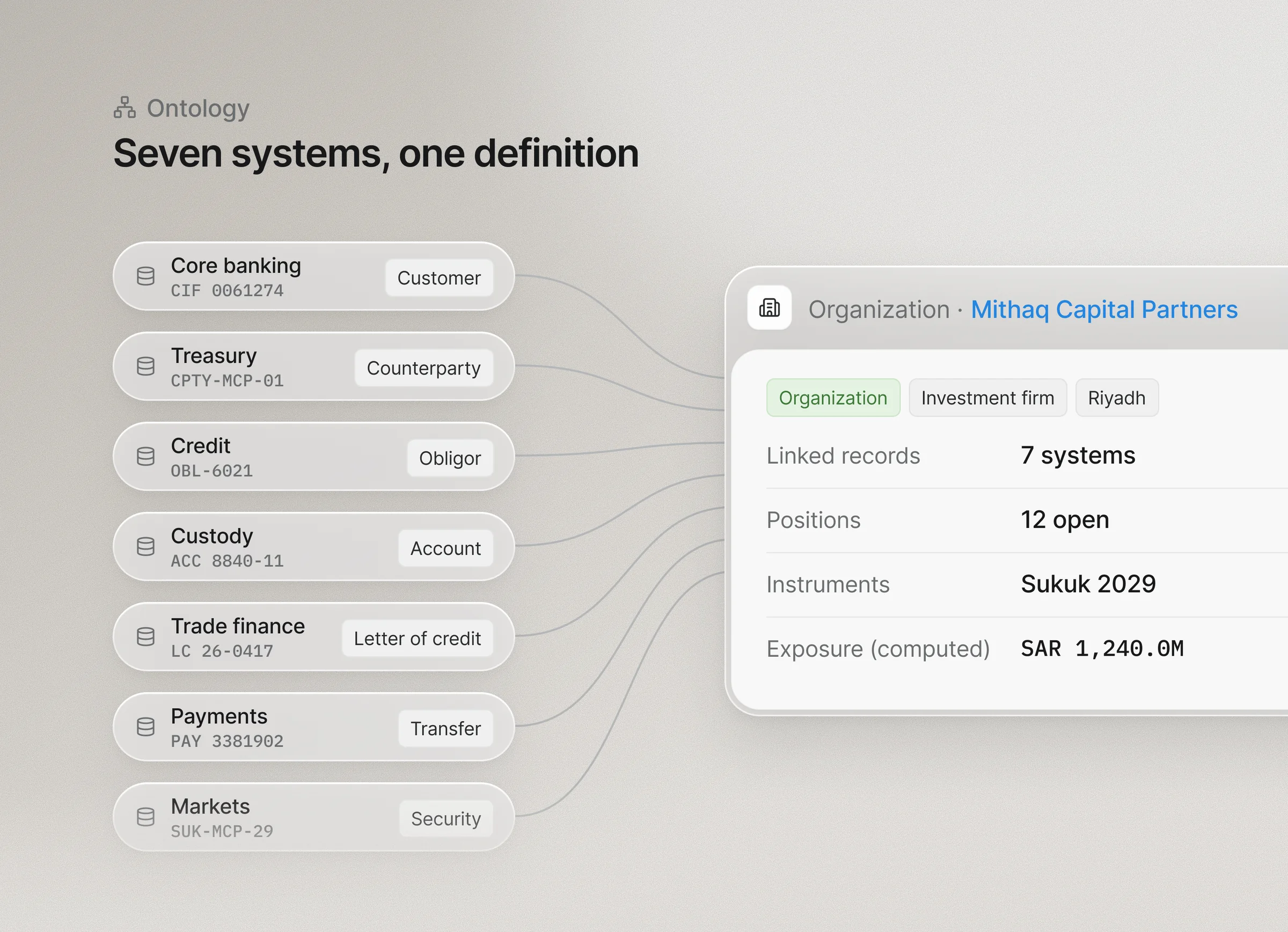
Each organization, instrument, and position is defined once and mapped to its records in every source system. The links between them are kept as well: who owns what, and who is exposed to whom.
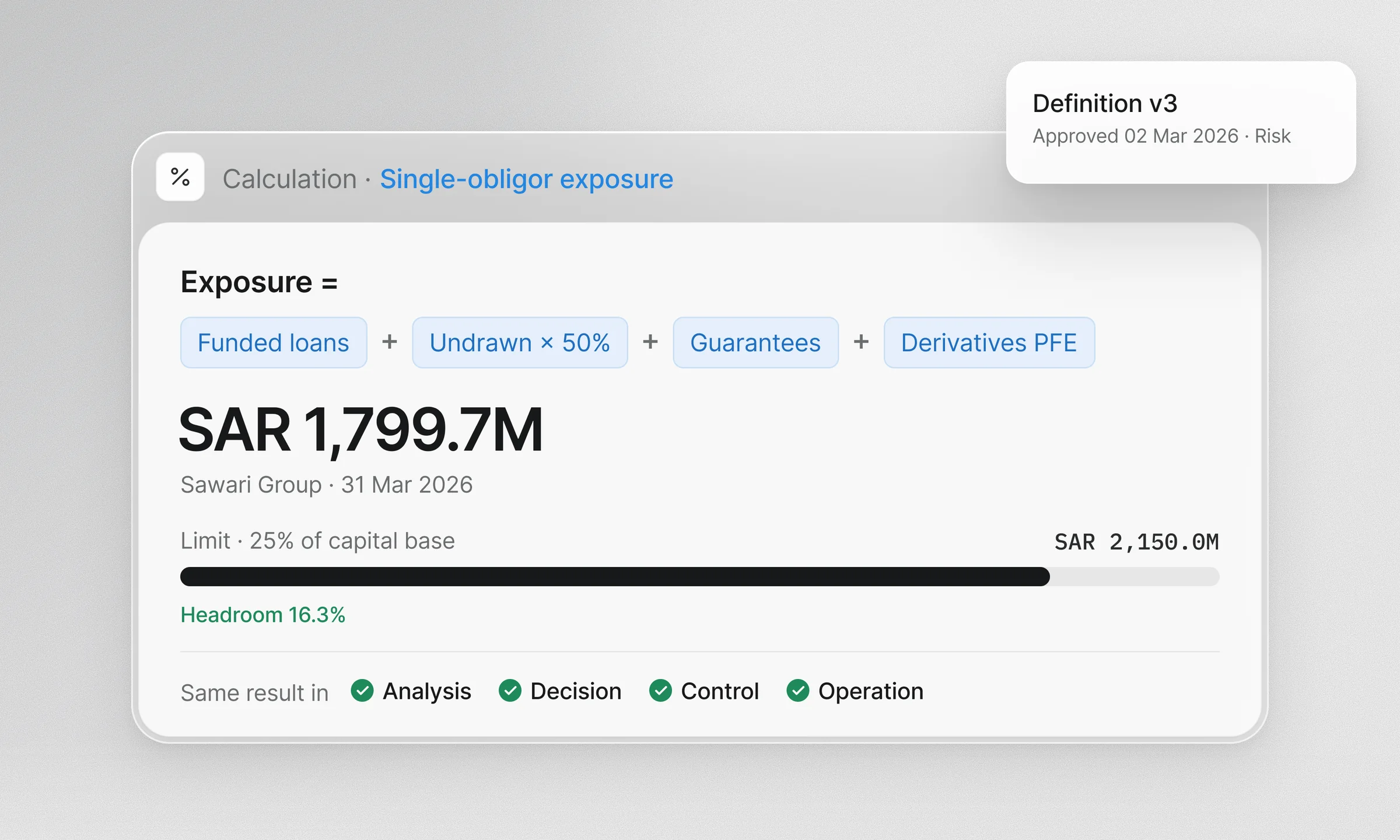
The institution’s own calculations and limits are held in the ontology, so a measure such as exposure is computed the same way whether the work is analysis, a decision, a control, or an operation.
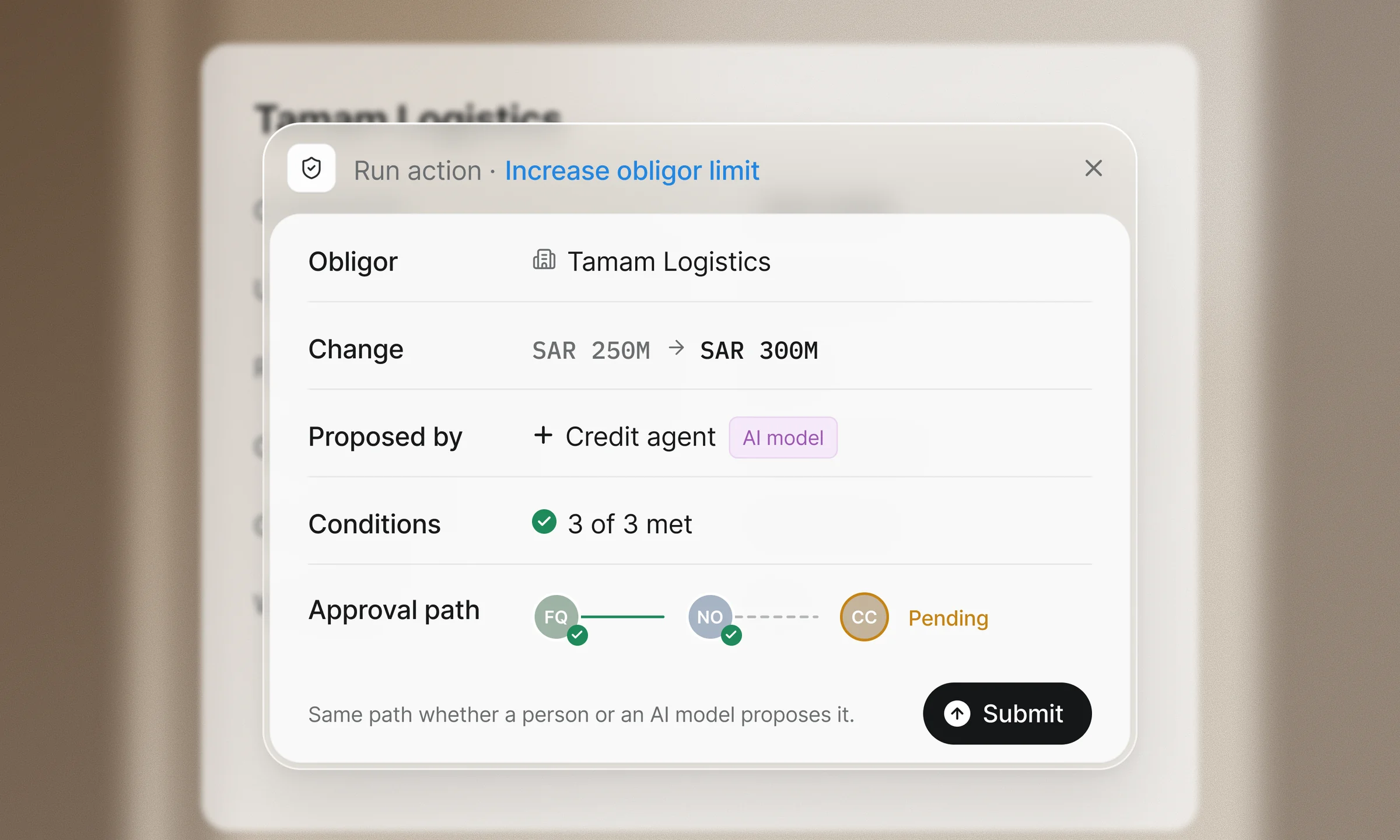
Changes are made through defined actions, each with its conditions, approvers, and log. A limit increase follows the same approval path whether a person or an AI model proposes it.

Lameh gives a bank’s credit, risk, and finance functions one record of its customers, exposures, and reported figures.

Lameh gives capital market institutions the market as its sources publish it and one view of clients, mandates, and positions across the firm.

Lameh gives family offices one view of what the family owns and a record of its decisions that passes from one generation to the next.

Lameh grounds the allocations of sovereign and development funds in the economy as officially reported and keeps the reasoning behind each one.
One definition of each entity, relationship, and rule your institution works with, read by its people, applications, and AI models.
Request demo