of supervised entities resolved to one entry across returns, registers, and case files
REGULATORS/Closer supervision of a growing market
Review filings faster, reach more supervised entities, and act on risks earlier.
Lameh gives regulators one view of each supervised entity, tests its reported figures against one another, and proposes rules from past cases, each linked to the cases that support it.
Request demo
recurring patterns proposed as rules from past cases
faster testing of a submission against the entity’s other filings
From the filing to the finding, supervision that can show its basis.
Each supervised entity seen whole
With Ontology, an entity that appears under different names across returns, registers, and case files becomes one entry. Its owners, subsidiaries, and exposures are linked to it, showing who owns what and who is exposed to whom.
Ontology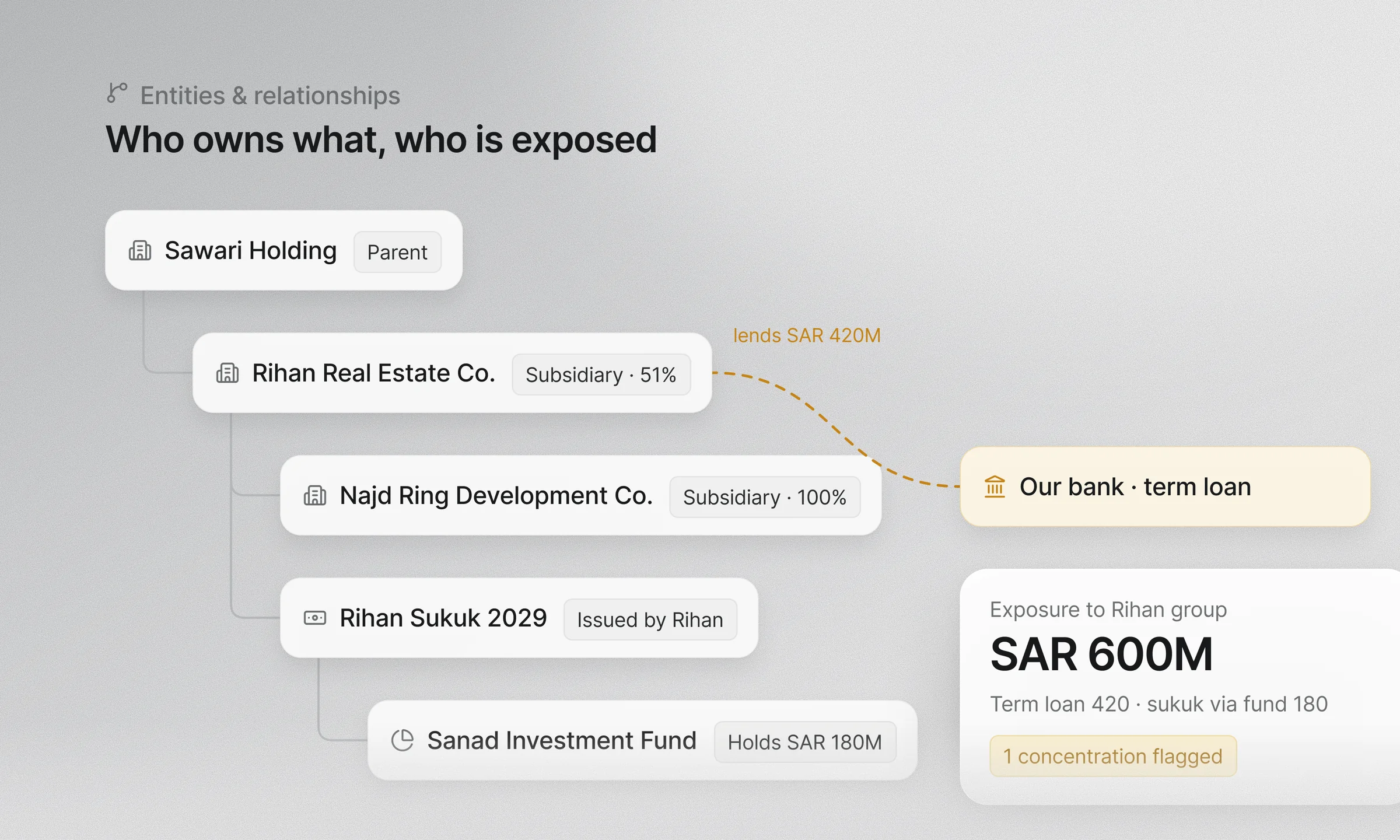
Reported figures tested against one another
With Reconciliation, the authority defines the figures that should agree across an entity’s submissions. Identifiers, units, and periods are normalized, so only actual differences are raised, ranked by size and probable cause.
Reconciliation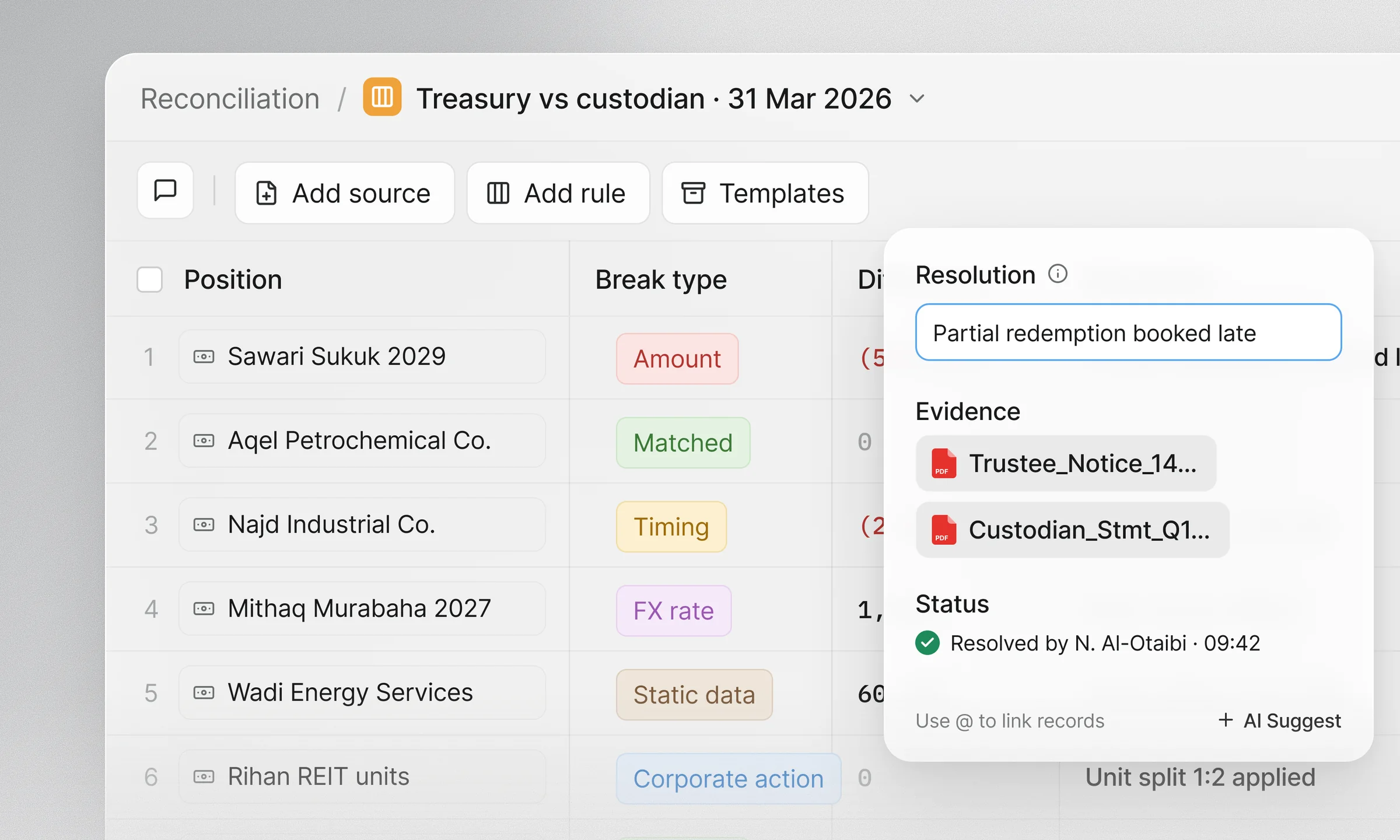
Decisions in line with precedent
Knowledge Induction reads past cases and decisions, extracts their facts, and compares them to show what recurs. Recurring patterns are proposed as rules to the function that owns them, each linked to the cases that support it.
Knowledge Induction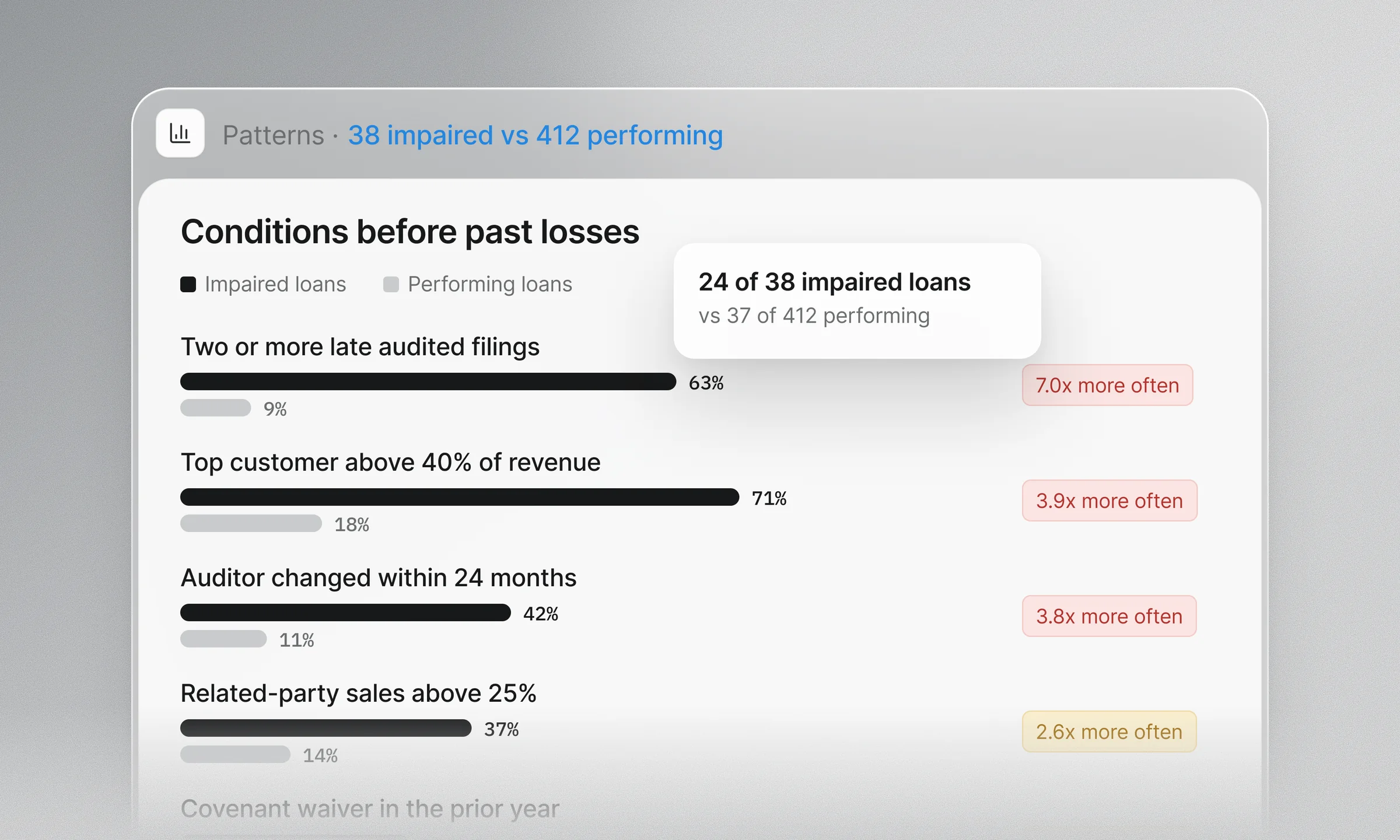
Explore the suite of products
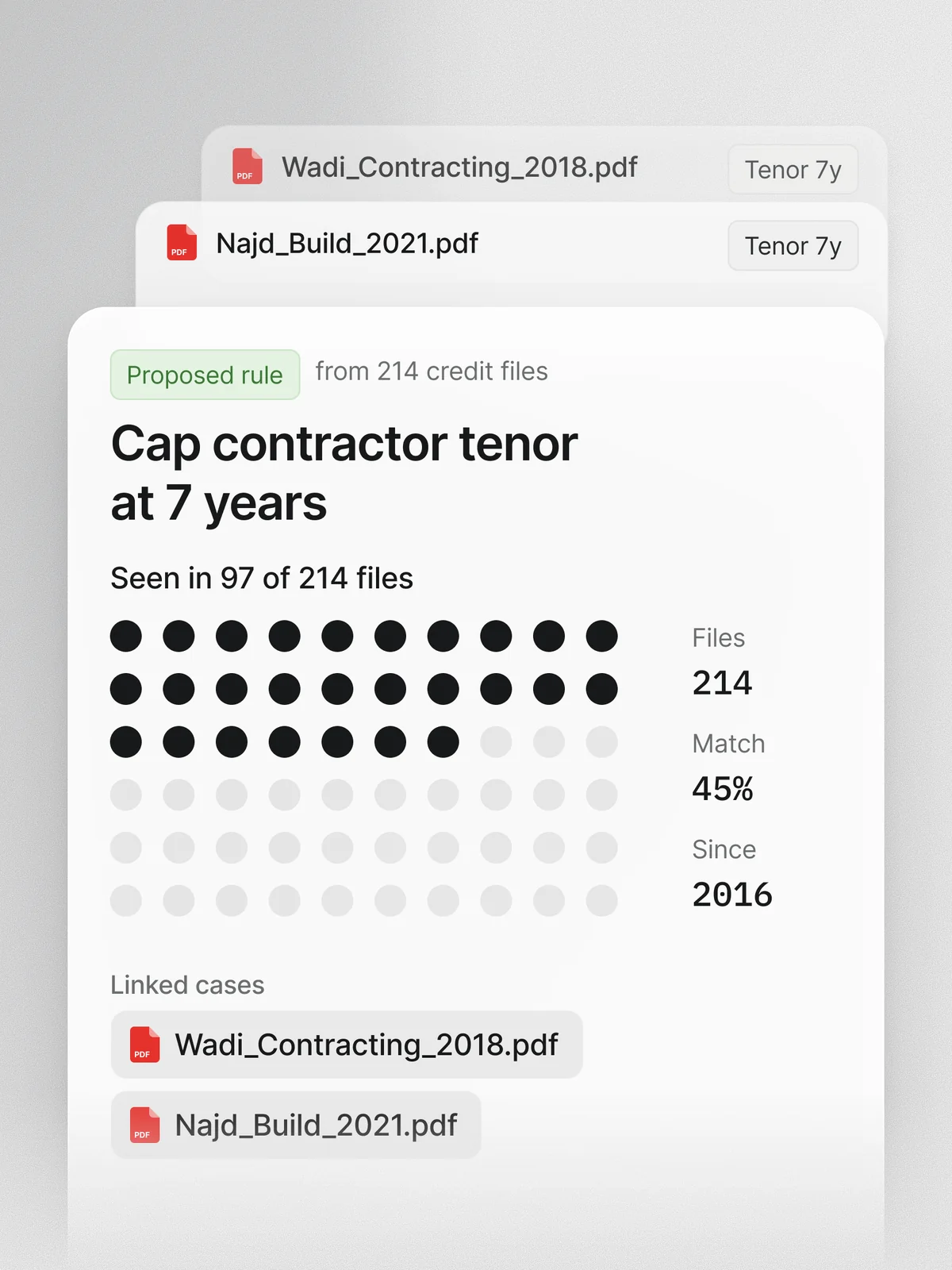
Knowledge Induction
Patterns in the institution’s past work, proposed as rules and linked to the cases that support them.
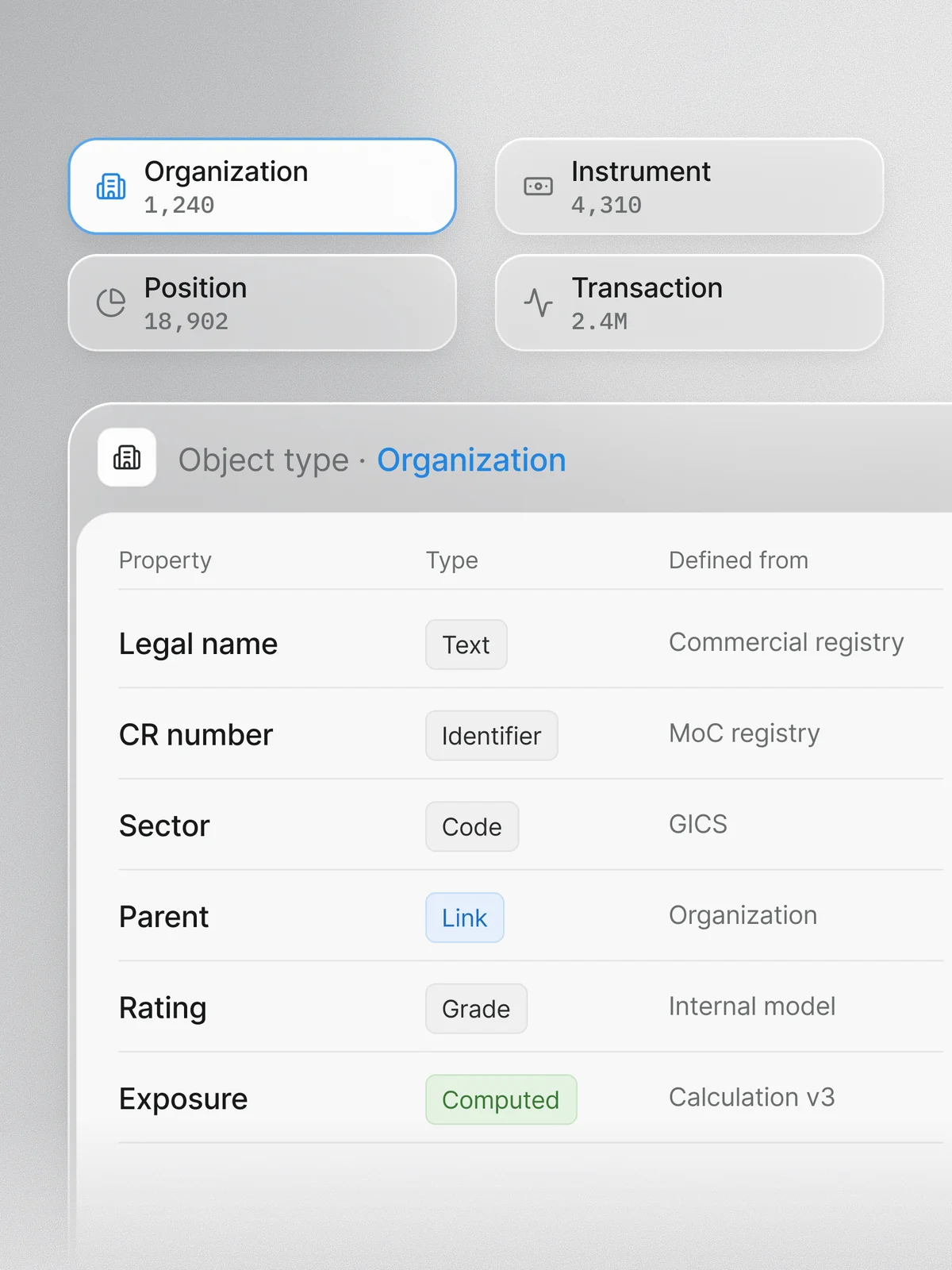
Ontology
One shared definition of the organizations, instruments, positions, and transactions the institution works with.
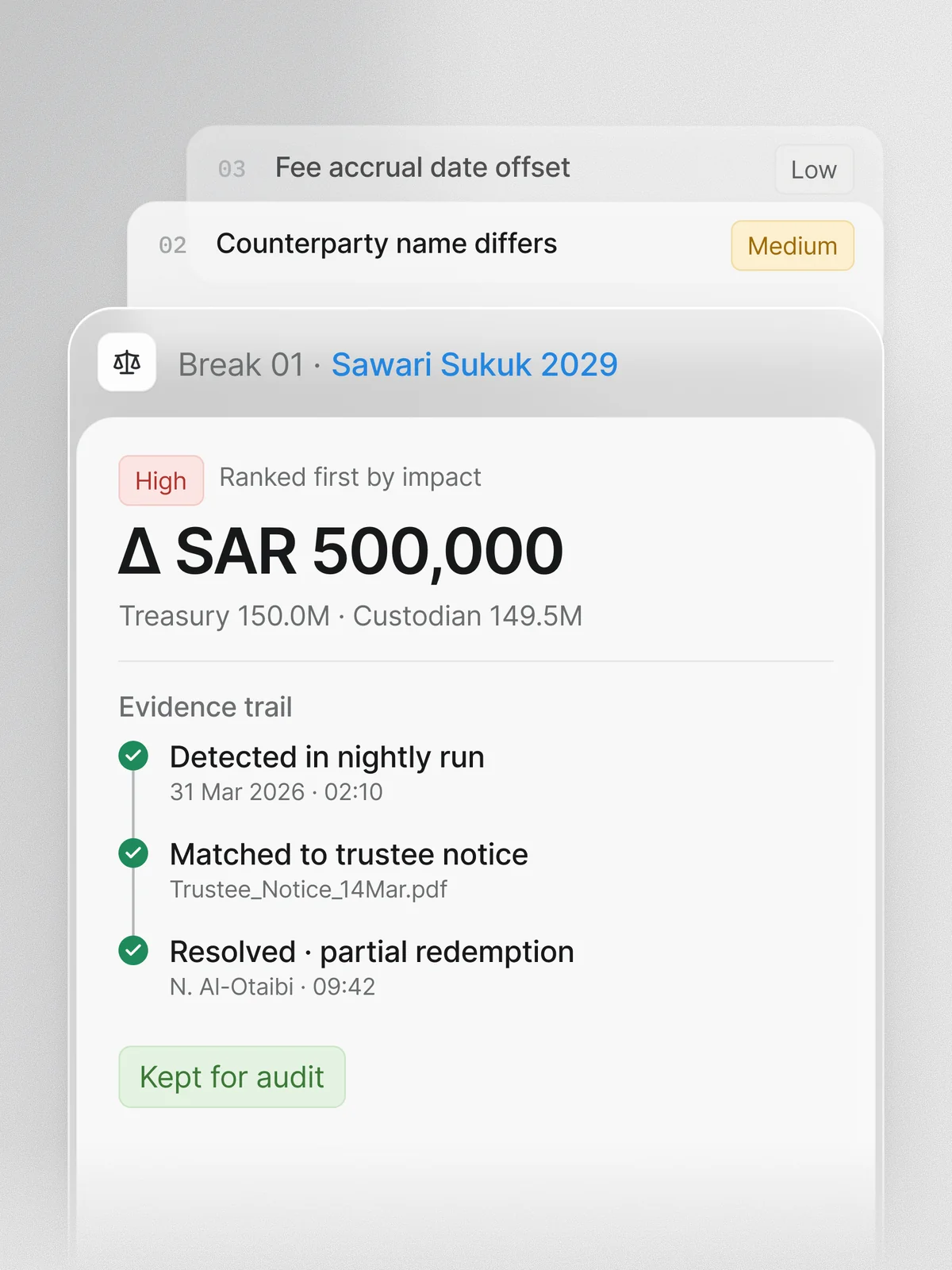
Reconciliation
Discrepancies found, ranked, and resolved, with the evidence trail kept for review and audit.
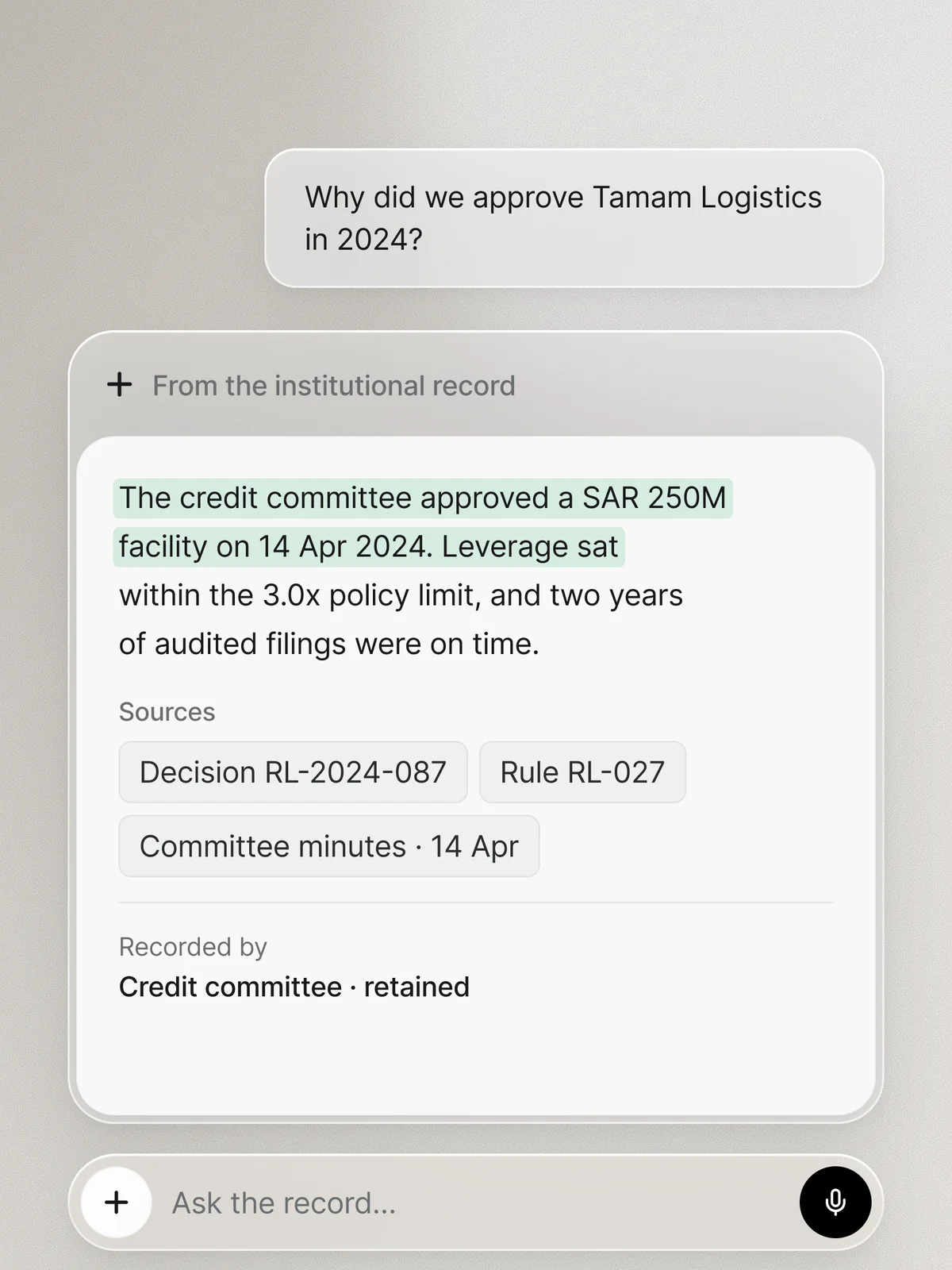
Institutional Record
Decisions, knowledge, and working methods recorded as the work happens and retained by the institution.
FAQ
Can a finding be traced to the documents behind it?
Yes. Each extracted fact is attached to the passage that states it, and each discrepancy shows both values alongside their sources.
How are expected differences separated from real ones?
Identifiers, formats, units, and periods are normalized first. Expected differences, such as timing and documented exceptions, are then set aside with a recorded explanation.
Does a proposed rule take effect on its own?
No. A recurring pattern is proposed to the function that owns it, with the cases that support it, and it is applied only after that function approves it.
How does Lameh verify the figures it provides?
Each figure is read from the official source that published it, kept as reported, and linked to the document it came from. Where a figure appears in more than one source, the values are reconciled.
How does Lameh work with the systems we already use?
Lameh links the records held in separate systems to the organizations, instruments, positions, and transactions they describe. Each is defined once and mapped to its records in every source system.
How are changes proposed by an AI model controlled?
Changes are made through defined actions, each with its conditions, approvers, and log. A limit increase follows the same approval path whether a person or an AI model proposes it.
Does the institution depend on a single AI model?
No. Each prompt is routed to the model best suited to it, weighing reasoning, accuracy, speed, and cost, and new models enter the routing as they are released.
Consistent oversight of every supervised entity
One entry for each entity you supervise, its reported figures tested against one another, and rules linked to the past cases that support them.
Request demo