less analyst time spent assembling data before a decision
INVESTMENT/From first look to decision, faster
Screen more opportunities, complete diligence sooner, and bring stronger memos to committee.
Lameh bases investment decisions on verified data and the institution’s own experience, and keeps the reasoning behind each position.
Request demo
companies screened by each analyst in a week
faster from first screen to investment memo
From the first screen to the exit, each decision on the record.
Screening and diligence from the source
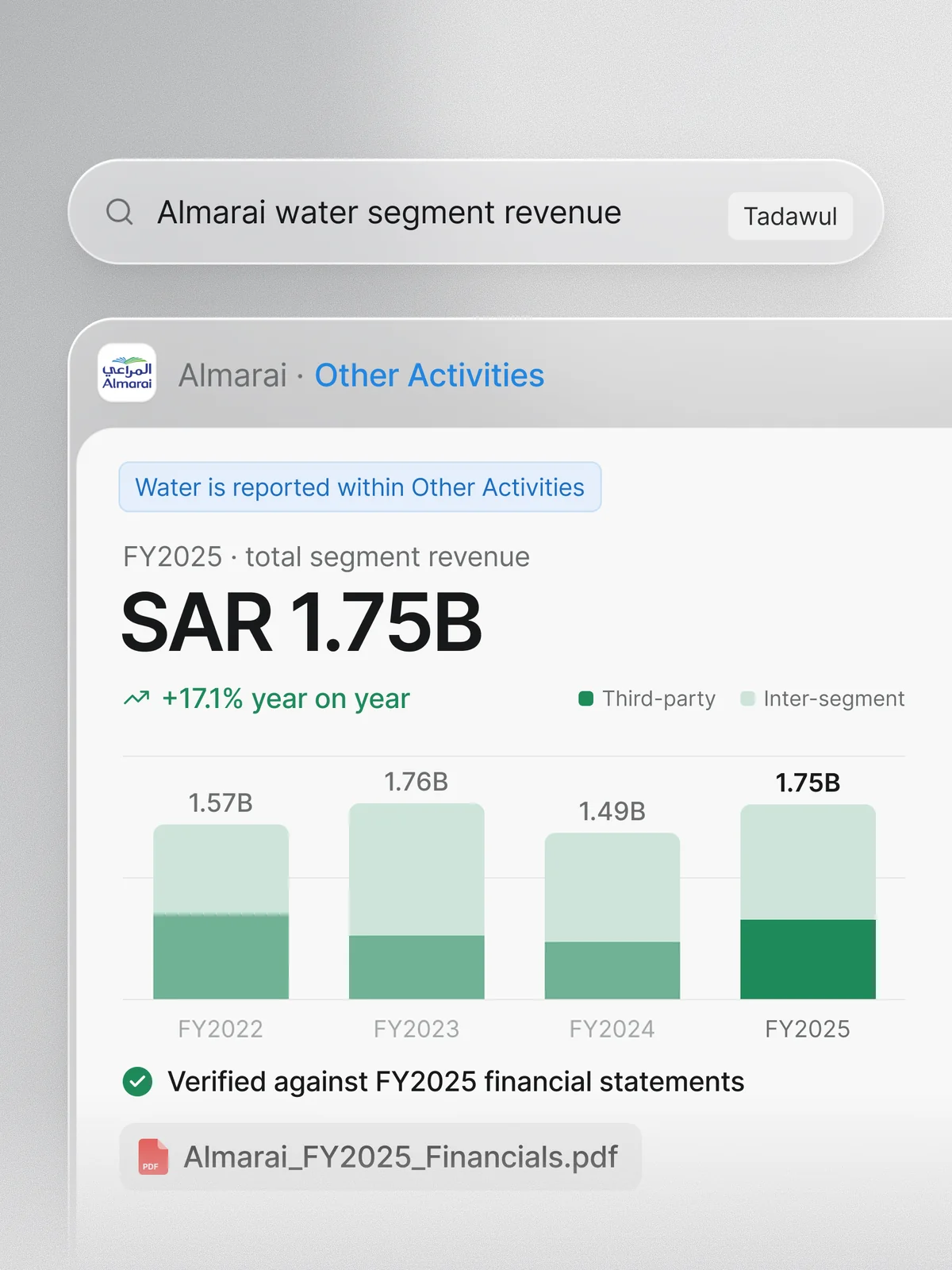
Proprietary Data holds listed and private companies on one statement taxonomy, with ownership and related-party transactions linked entity to entity, alongside offerings and mergers and acquisitions. A target is examined from figures kept as reported, each linked to its document.
Proprietary Data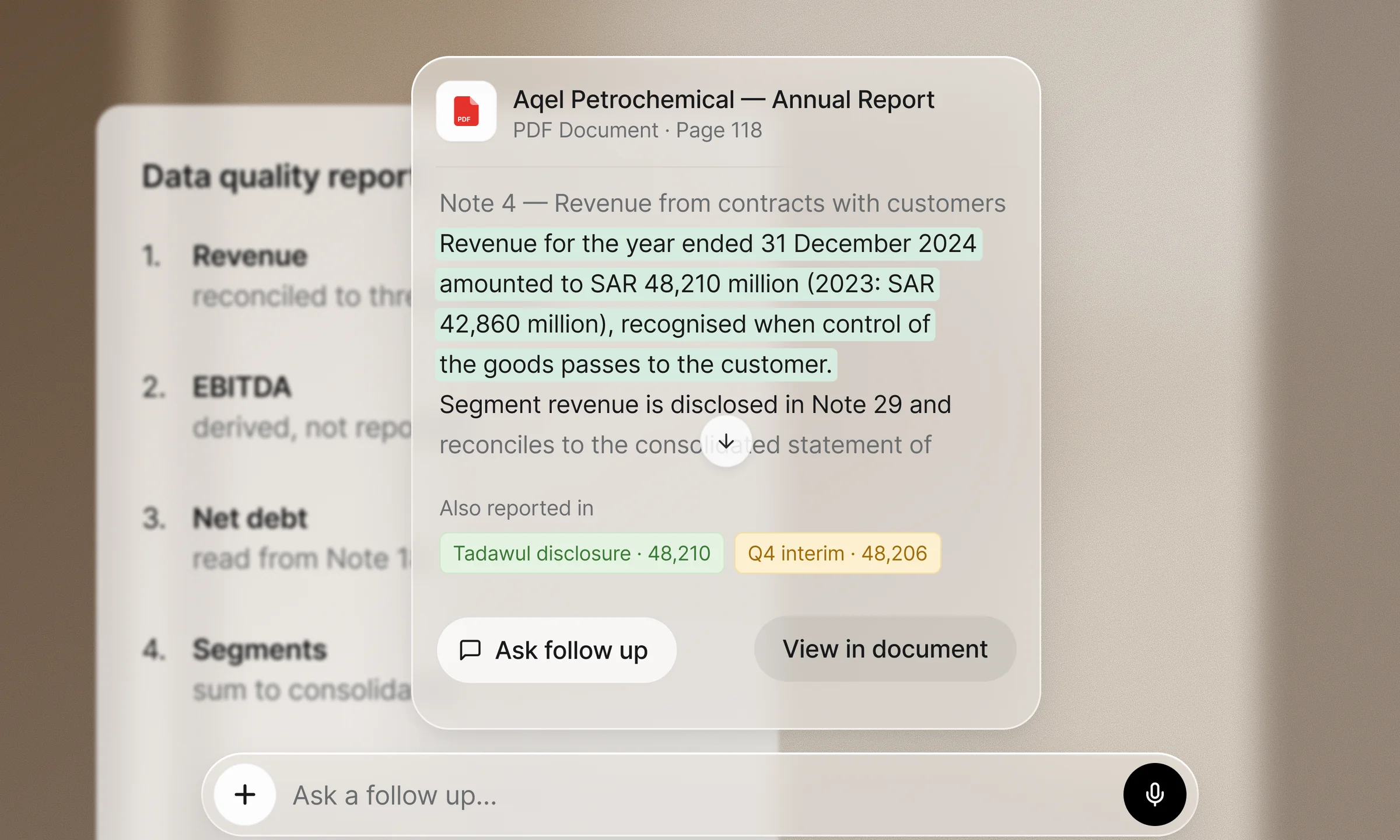
Criteria drawn from past decisions
Knowledge Induction reads the institution’s past memos, term sheets, and reviews and compares them across cases. The terms the institution usually accepts and the conditions that preceded past losses are proposed as rules for the investment function to approve.
Knowledge Induction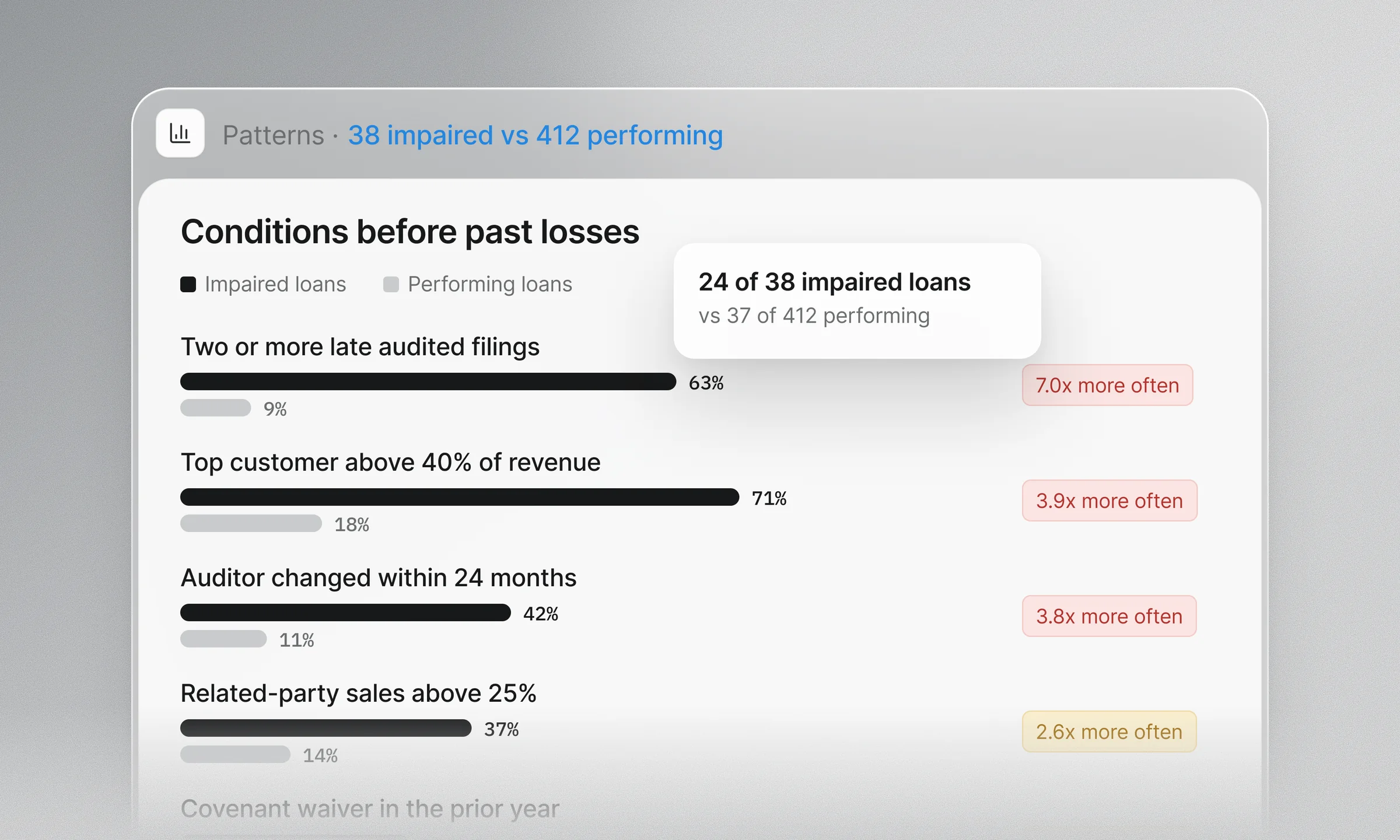
The thesis kept with the position
Institutional Record captures each decision as it is made, with its owner, evidence, alternatives, and reasoning. A successor inherits the grounds for a position and builds on the assessment already made.
Institutional Record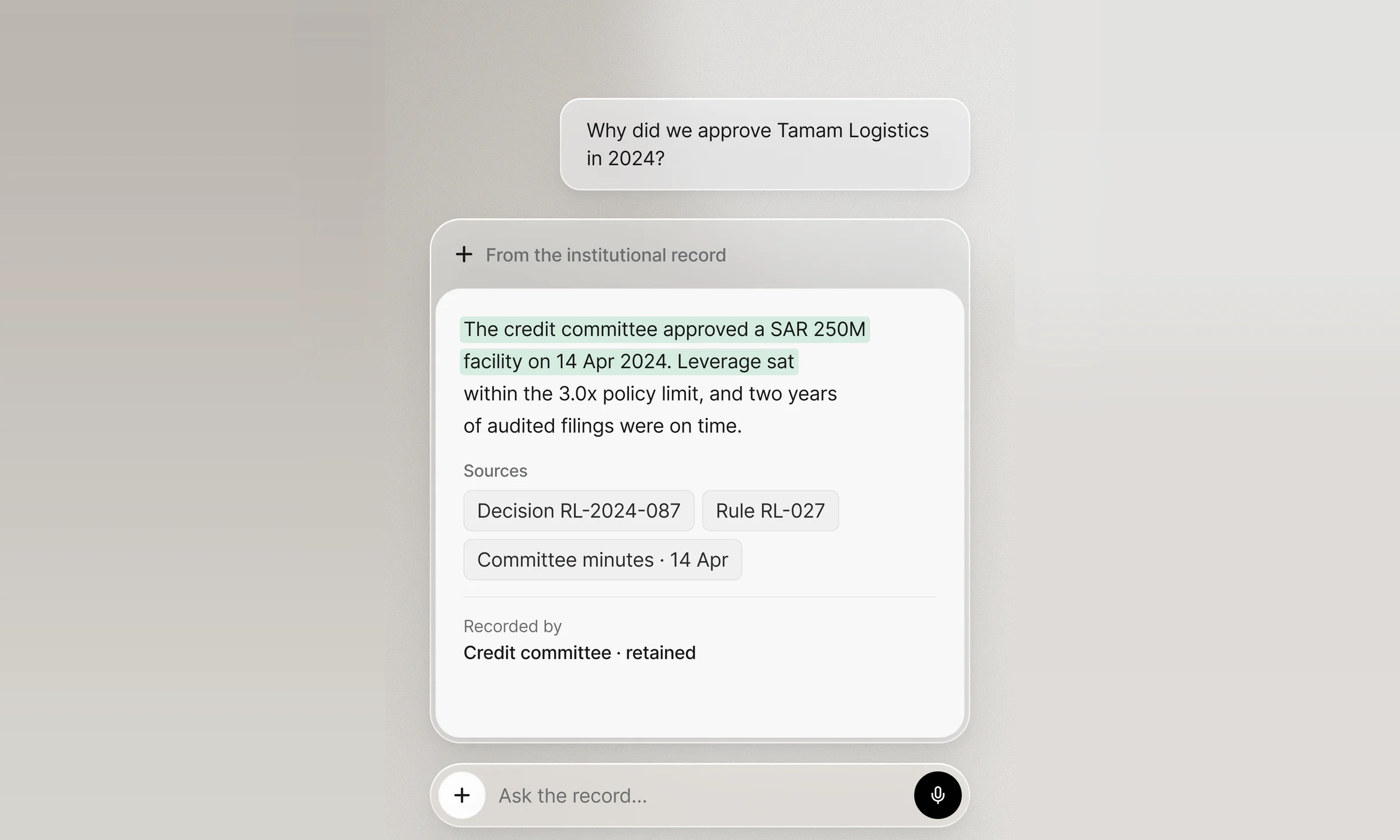
Explore the suite of products
Proprietary Data
Verified, granular data on the region’s companies, markets, and economy, with each figure linked to the source that published it.
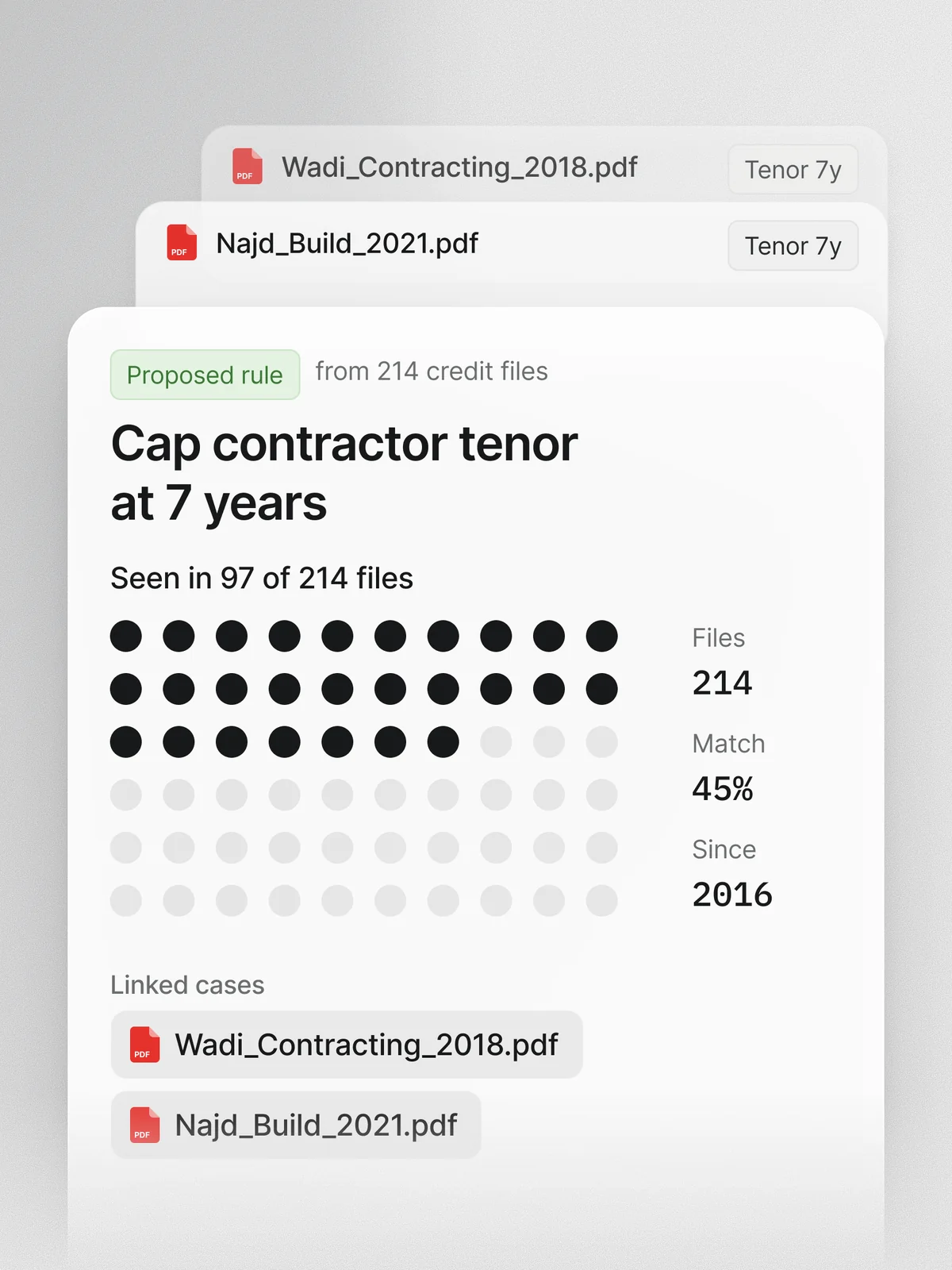
Knowledge Induction
Patterns in the institution’s past work, proposed as rules and linked to the cases that support them.
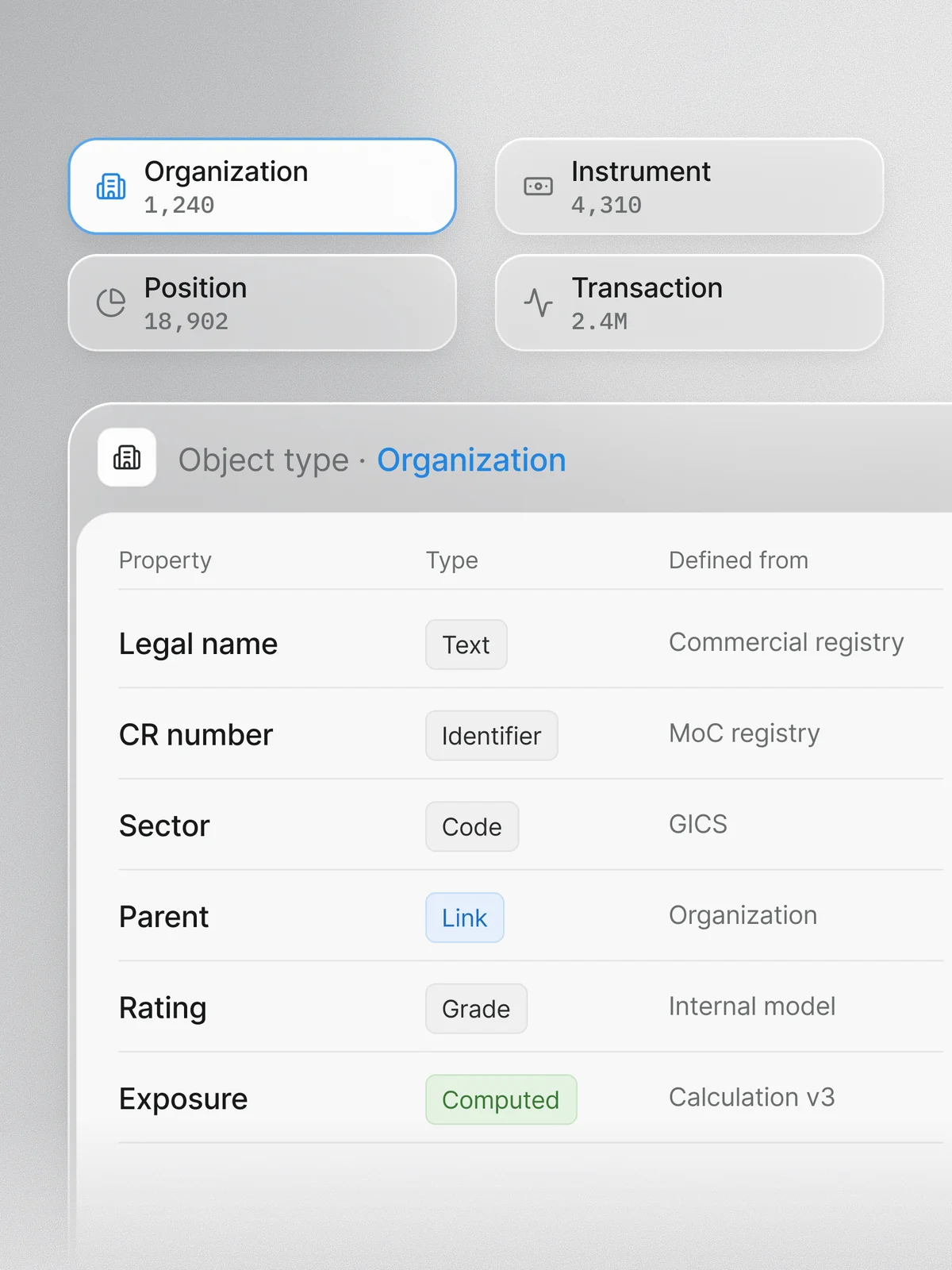
Ontology
One shared definition of the organizations, instruments, positions, and transactions the institution works with.
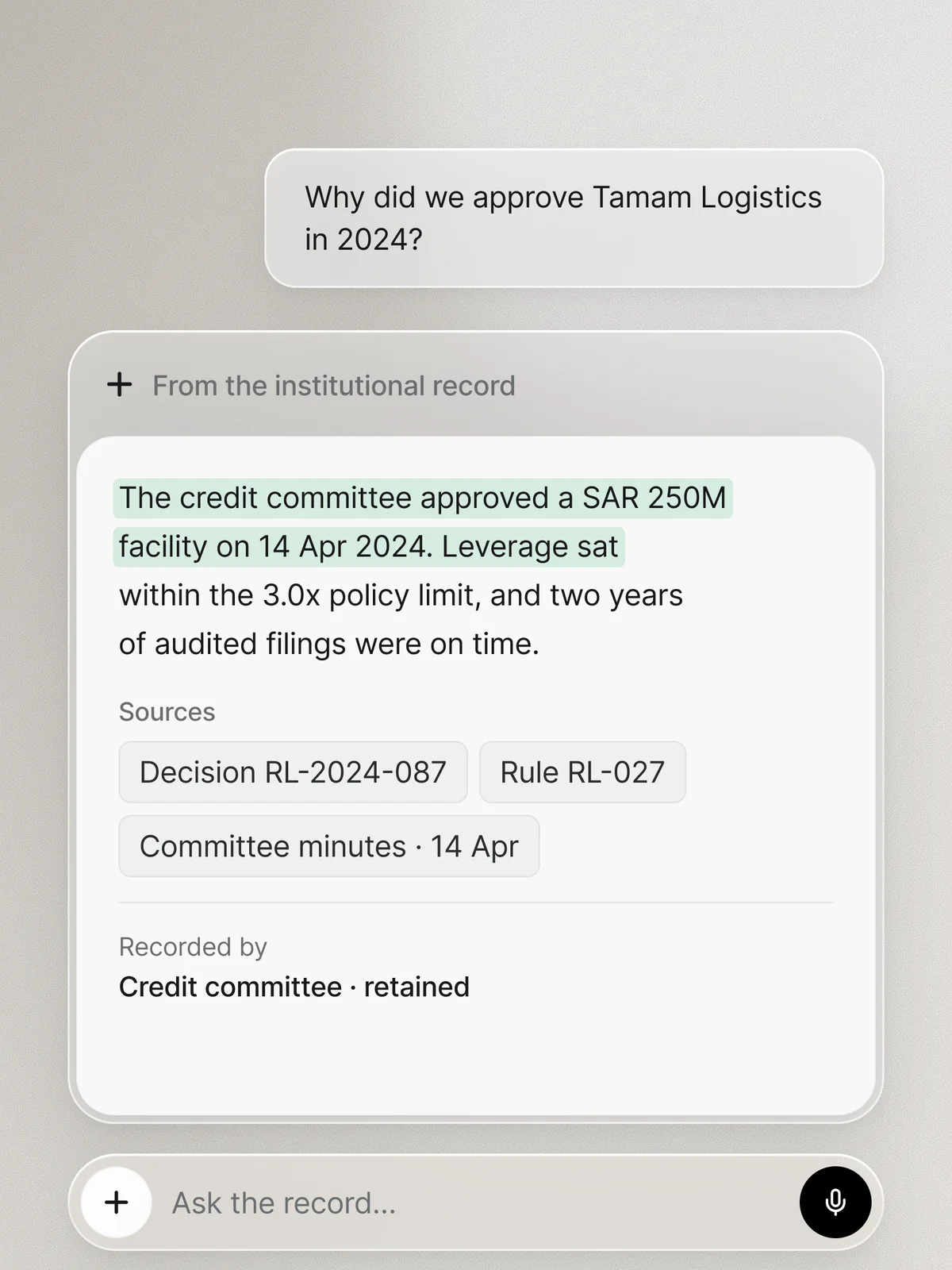
Institutional Record
Decisions, knowledge, and working methods recorded as the work happens and retained by the institution.
FAQ
Does Lameh make investment decisions?
No. Each decision stays with its owner, while Lameh supplies verified data, proposes rules for the function to approve, and records the decision with its evidence and reasoning.
Which transactions does the data cover?
Offerings and prospectuses cover IPOs, rights issues, and Nomu listings with offer terms, use of proceeds, selling shareholders, and advisors. Mergers and acquisitions carry parties, stake, consideration, advisors, and competition clearance status.
How are the institution’s investment criteria derived?
They come from its own past work. Facts are extracted from memos, contracts, and older files and compared across cases, and what recurs is proposed as a rule linked to the cases that support it.
How does Lameh verify the figures it provides?
Each figure is read from the official source that published it, kept as reported, and linked to the document it came from. Where a figure appears in more than one source, the values are reconciled.
How does Lameh work with the systems we already use?
Lameh links the records held in separate systems to the organizations, instruments, positions, and transactions they describe. Each is defined once and mapped to its records in every source system.
How are changes proposed by an AI model controlled?
Changes are made through defined actions, each with its conditions, approvers, and log. A limit increase follows the same approval path whether a person or an AI model proposes it.
Does the institution depend on a single AI model?
No. Each prompt is routed to the model best suited to it, weighing reasoning, accuracy, speed, and cost, and new models enter the routing as they are released.
Conviction with its evidence attached
Verified data on each target, your institution’s own experience stated as rules, and the reasoning behind every position kept for those who follow.
Request demo