of changes made through defined actions, each with its approvers and log
COMPLIANCE/Ready for every inspection
Keep pace with new regulation, clear reviews faster, and answer every inspection with confidence.
Lameh builds an institution’s controls into the work itself and keeps the evidence a reviewer will ask for.
Request demo
hours saved in answering each review request
faster tracing of a decision to its evidence
From the rule to the evidence, controls that travel with the work.
Counterparties with their shareholders and related parties
Proprietary Data links substantial shareholders, board and executive holdings, partners’ shares, and related-party transactions entity to entity. A counterparty is seen together with its substantial shareholders and related parties.
Proprietary Data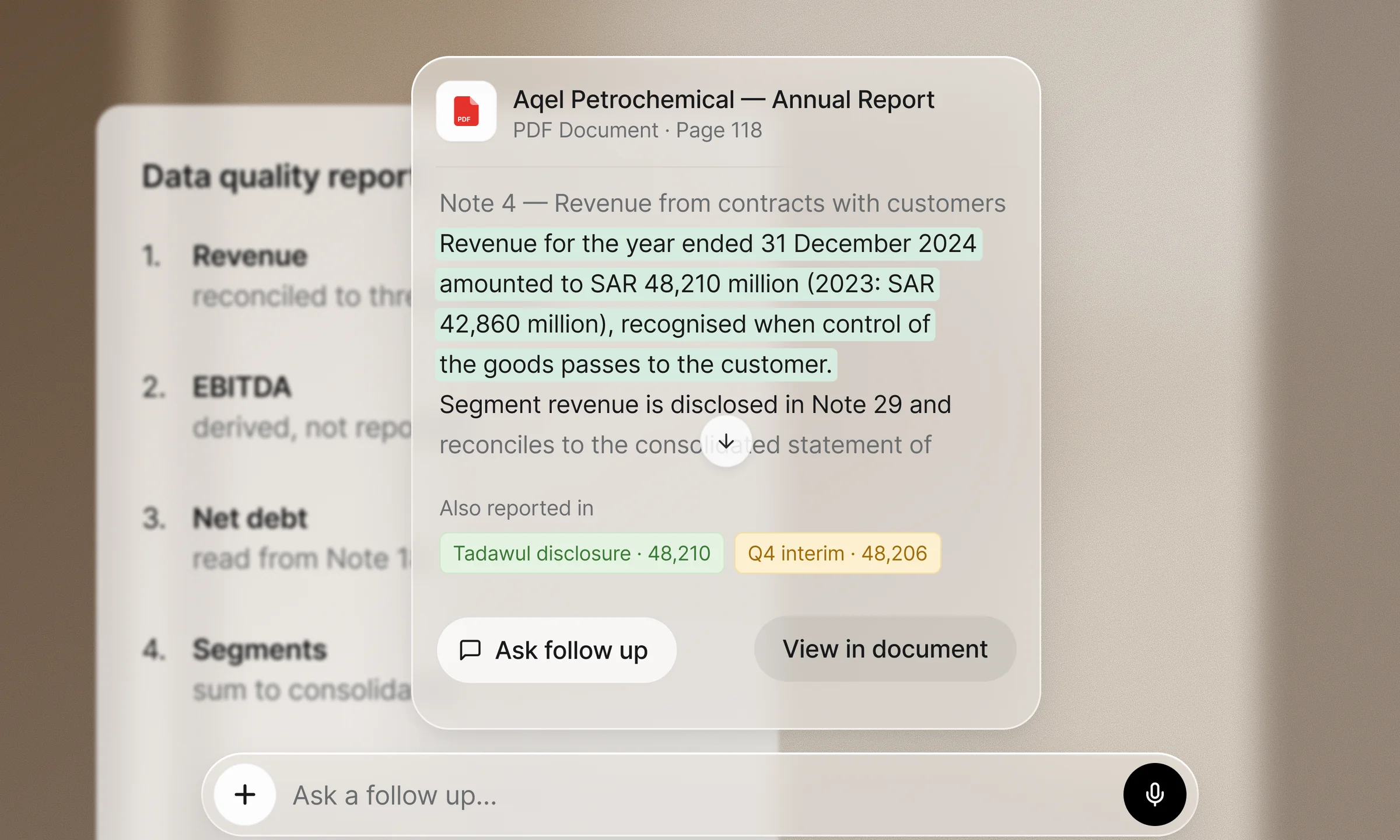
Actions with their permissions
With Ontology, changes are made through defined actions, each with its conditions, approvers, and log. The same approval path applies whether a person or an AI model proposes the change.
Ontology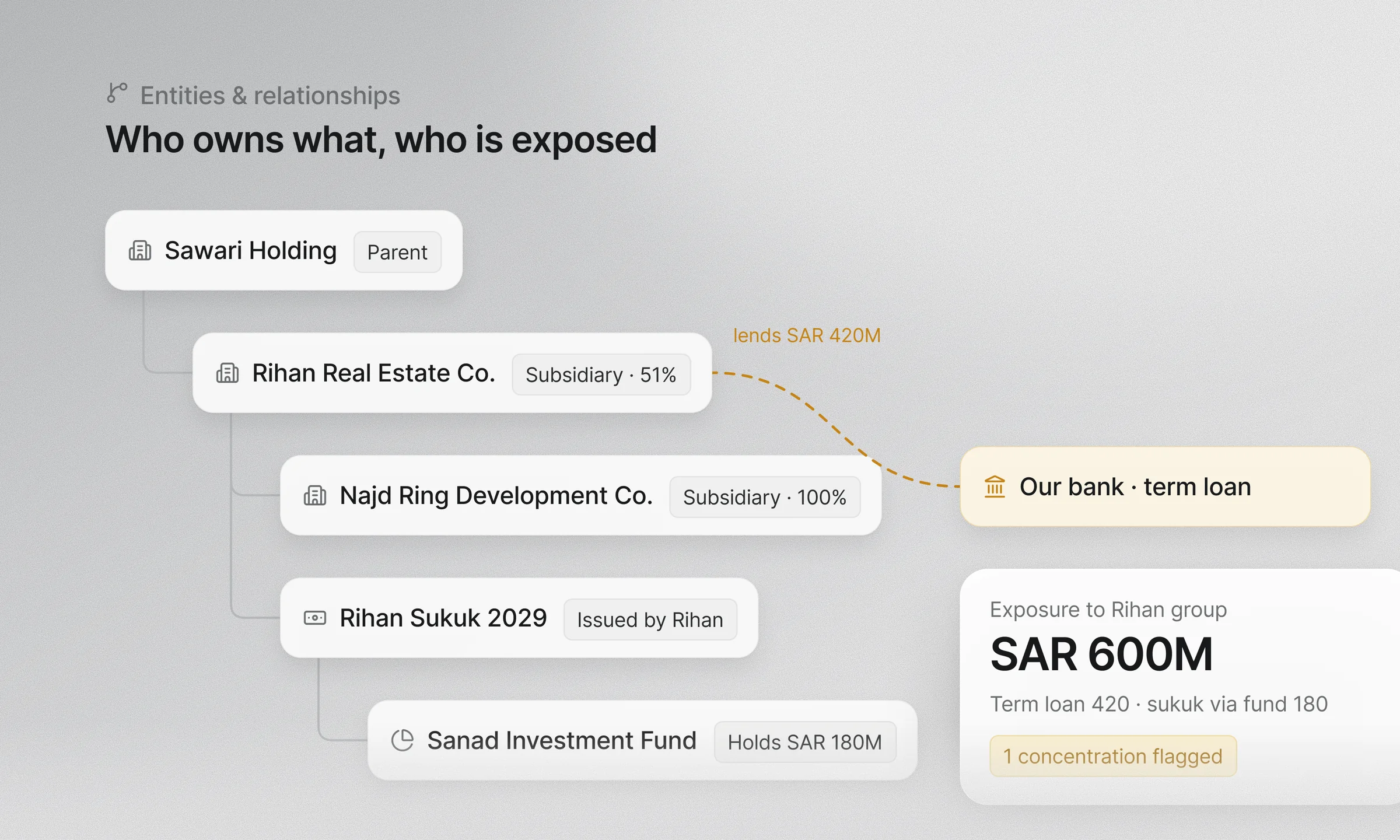
Evidence kept as the work is done
Institutional Record captures each decision with its owner, evidence, alternatives, and reasoning, together with the function’s standards and accepted exceptions. A reviewer can trace the grounds for a position.
Institutional Record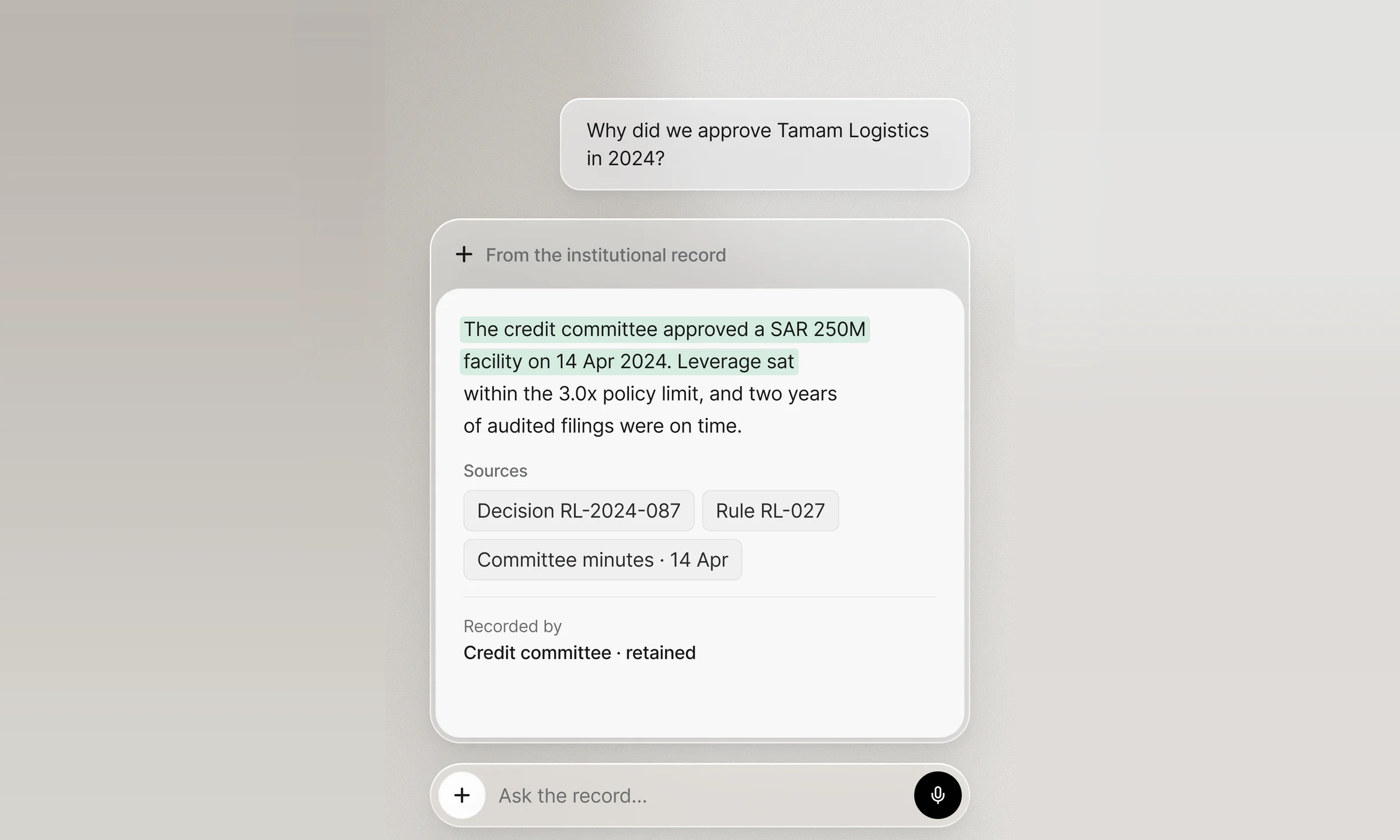
Explore the suite of products
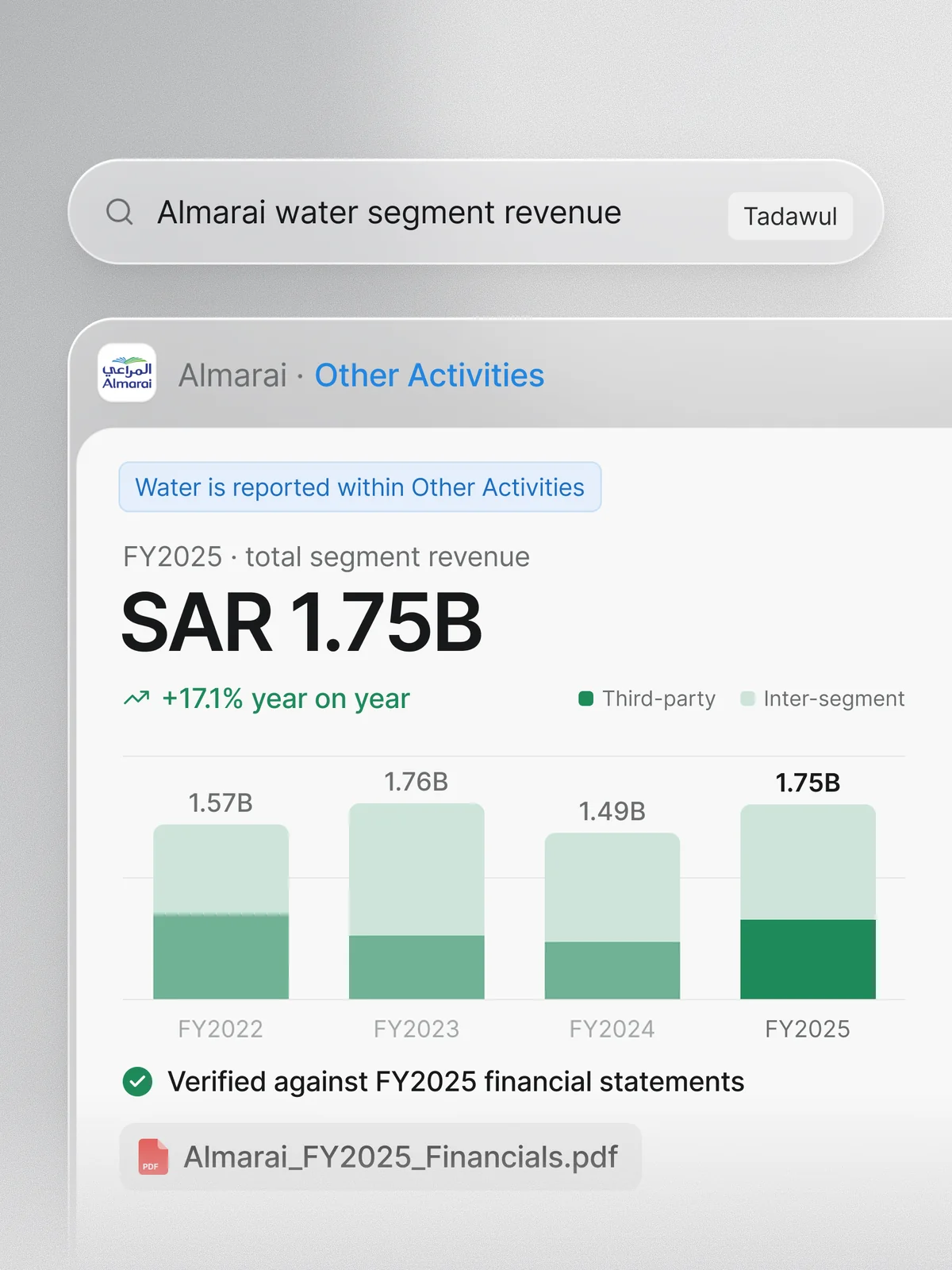
Proprietary Data
Verified, granular data on the region’s companies, markets, and economy, with each figure linked to the source that published it.
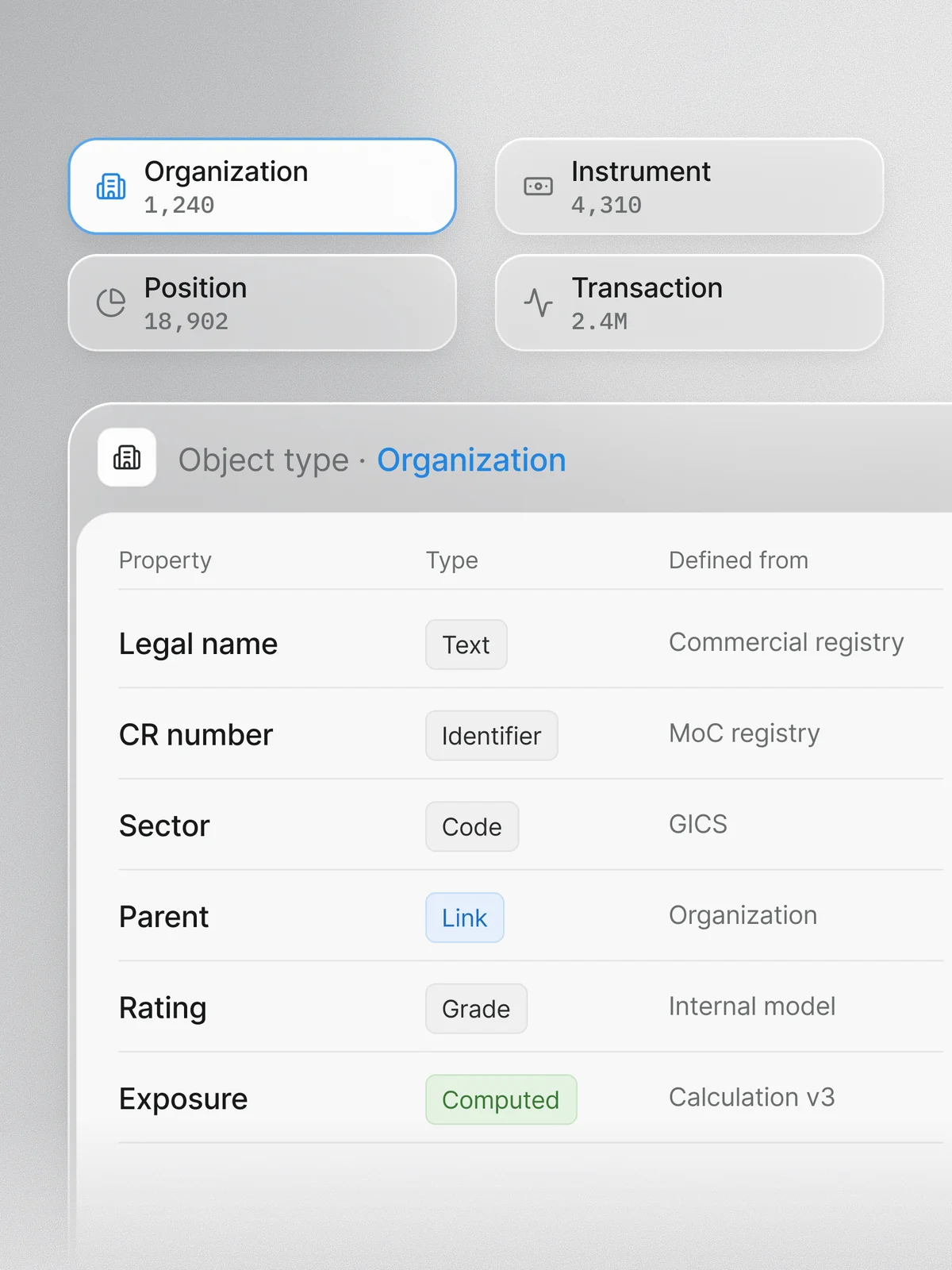
Ontology
One shared definition of the organizations, instruments, positions, and transactions the institution works with.
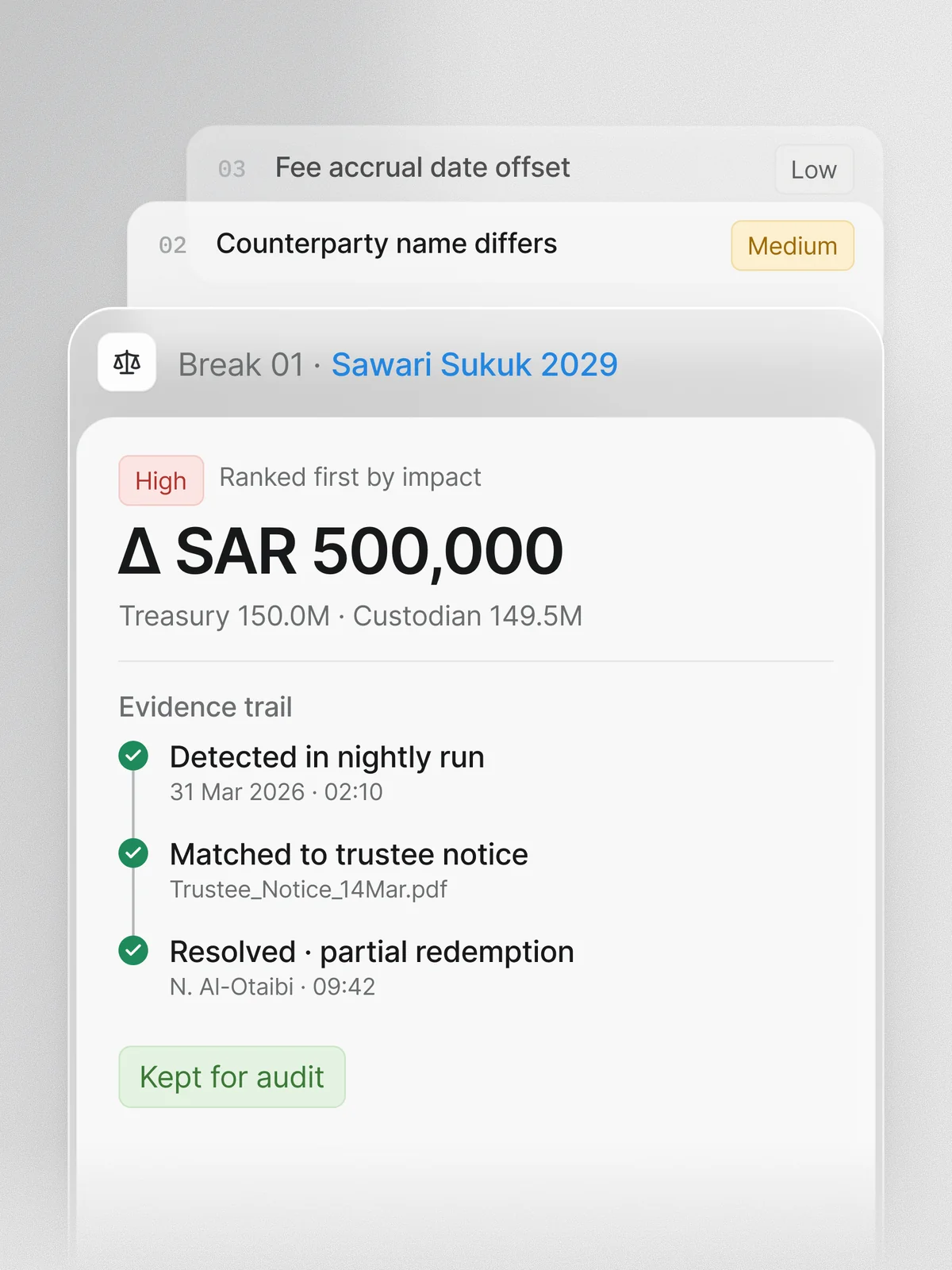
Reconciliation
Discrepancies found, ranked, and resolved, with the evidence trail kept for review and audit.
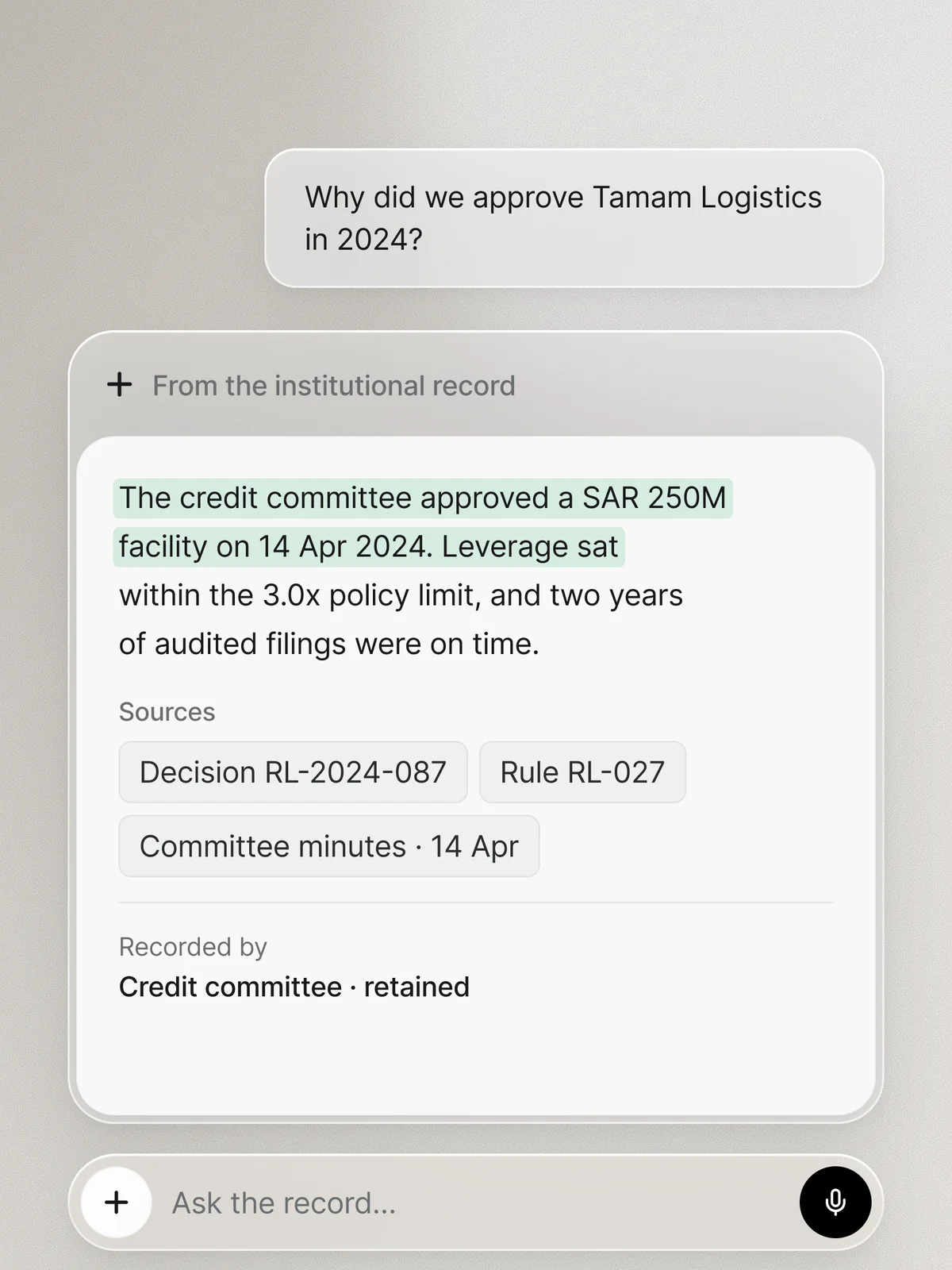
Institutional Record
Decisions, knowledge, and working methods recorded as the work happens and retained by the institution.
FAQ
Does the data show related parties?
Yes. Substantial shareholders, board and executive holdings, partners’ shares in unlisted companies, and related-party transactions are linked entity to entity.
Where are accepted exceptions recorded?
Each function’s accepted exceptions are drawn from its work into the record, alongside its methods and standards. In reconciliation, documented exceptions are set aside with a recorded explanation.
Can a reviewer reconstruct why a decision was made?
Yes. Each decision is recorded as it is made, with its owner, evidence, alternatives, and reasoning, and every entry is attributed, dated, and linked to its sources.
How does Lameh verify the figures it provides?
Each figure is read from the official source that published it, kept as reported, and linked to the document it came from. Where a figure appears in more than one source, the values are reconciled.
How does Lameh work with the systems we already use?
Lameh links the records held in separate systems to the organizations, instruments, positions, and transactions they describe. Each is defined once and mapped to its records in every source system.
How are changes proposed by an AI model controlled?
Changes are made through defined actions, each with its conditions, approvers, and log. A limit increase follows the same approval path whether a person or an AI model proposes it.
Does the institution depend on a single AI model?
No. Each prompt is routed to the model best suited to it, weighing reasoning, accuracy, speed, and cost, and new models enter the routing as they are released.
Controls and their evidence in one place
Defined actions with their approvers and logs, each counterparty linked to its shareholders and related parties, and a record your reviewers can trace.
Request demo