Facts from existing material
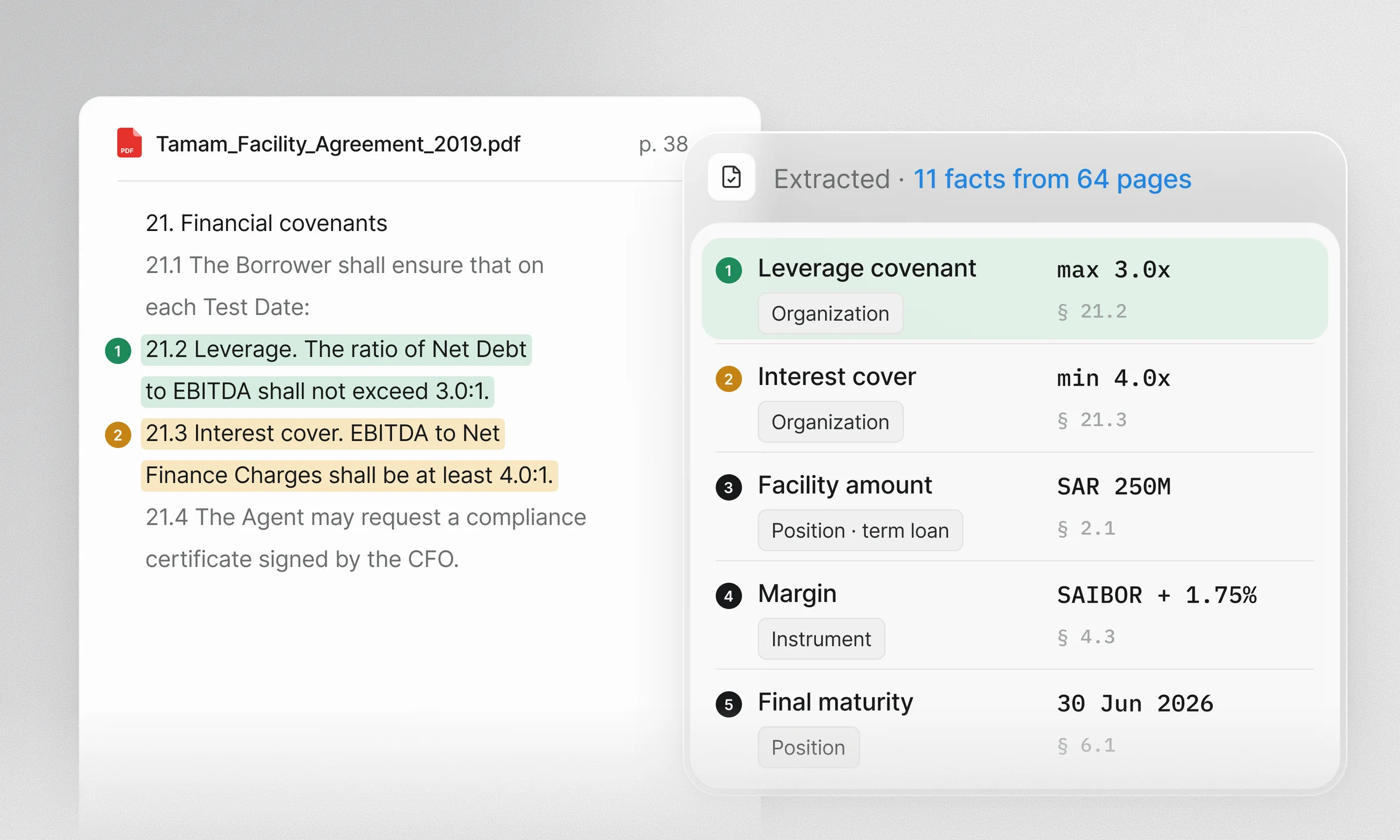
Terms, figures, and dates are extracted from contracts, filings, memos, and older files. Each fact is attached to the organization, instrument, or position it concerns and to the passage that states it.
Lameh reads what the institution has already produced, extracts the facts, and compares them across cases to find what recurs. Recurring patterns are proposed as rules, each linked to the cases that support it.
Request demo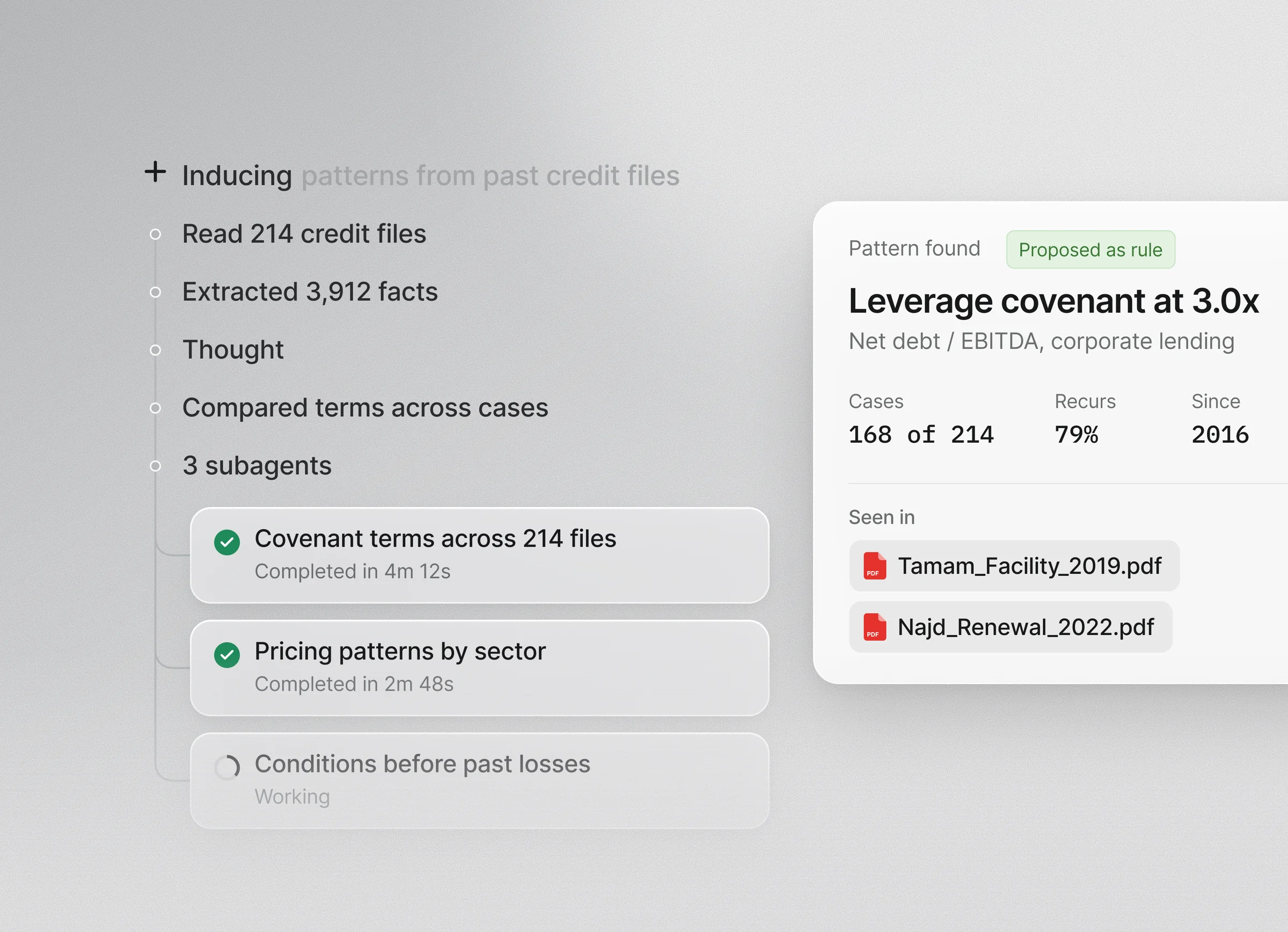
Terms, figures, and dates are extracted from contracts, filings, memos, and older files. Each fact is attached to the organization, instrument, or position it concerns and to the passage that states it.
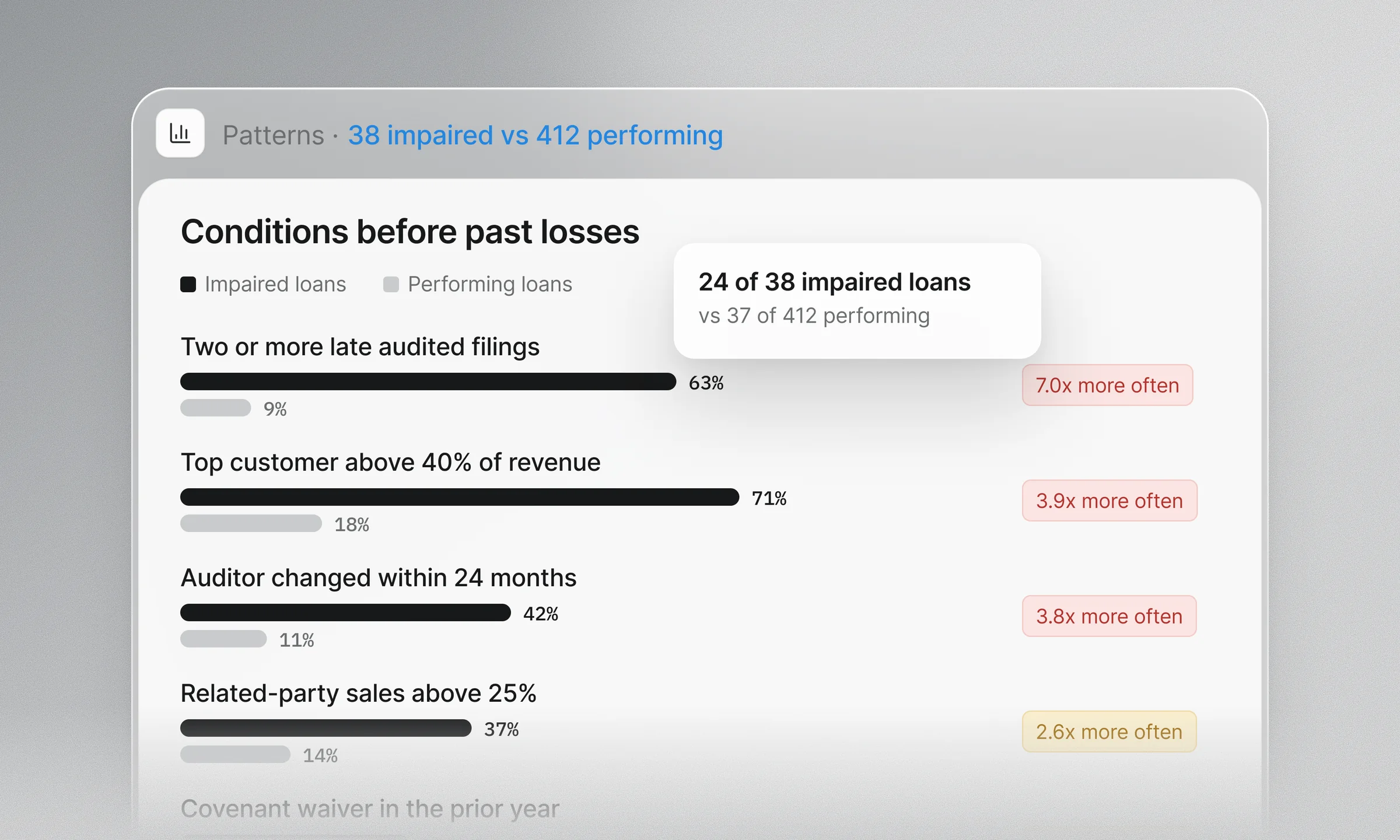
Facts are compared across many cases to show what recurs: the terms the institution usually accepts, for example, or the conditions that preceded past losses.
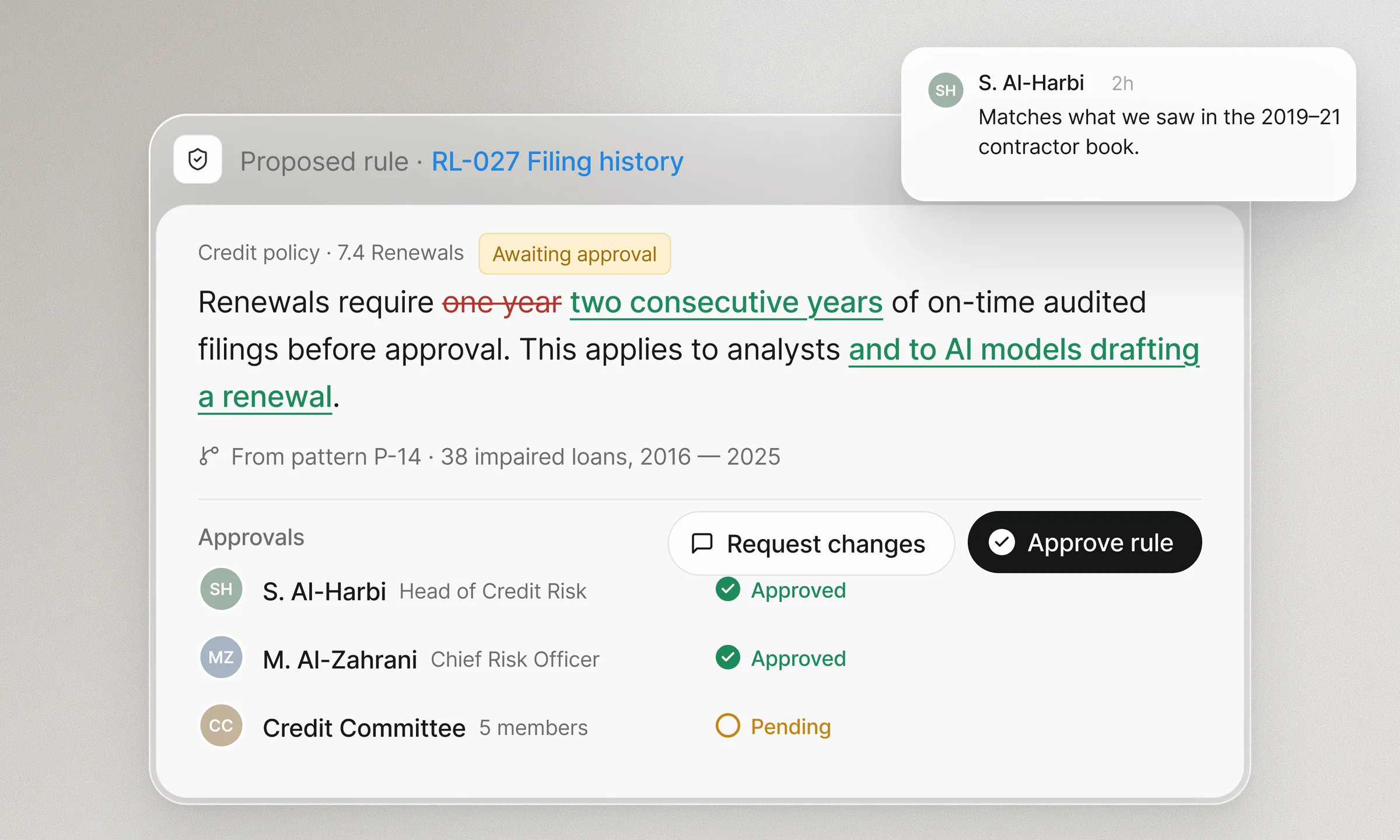
A recurring pattern is proposed as a rule to the function that owns it, whether its work is analysis, a decision, a control, or an operation. Once approved, people and AI models apply it.

Lameh gives a bank’s credit, risk, and finance functions one record of its customers, exposures, and reported figures.
Lameh gives capital market institutions the market as its sources publish it and one view of clients, mandates, and positions across the firm.

Lameh gives family offices one view of what the family owns and a record of its decisions that passes from one generation to the next.

Lameh grounds the allocations of sovereign and development funds in the economy as officially reported and keeps the reasoning behind each one.
The patterns in your institution’s past work, stated as rules, each linked to the cases behind it and approved before use.
Request demo